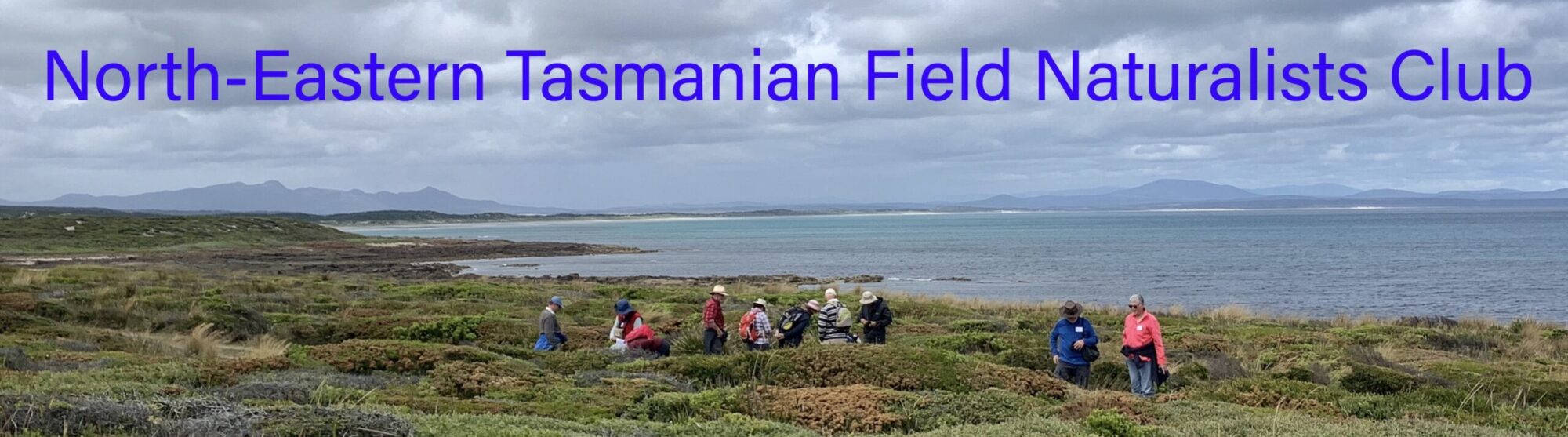
Moving the schedule from a wet and wild Saturday to a sunny and clear Sunday, 15 people set out with Mike Douglas to look at the landform and vegetation communities of Waterhouse.
The area is well known to the club. A report from the 2023 field trip there with Mike Douglas and palaeobotanist Ian Thomas is available on the website here.
We walked inland from Blizzards Landing to view the extraordinarily dense she-oak (allocasuarina) regeneration resulting from the big fire in the reserve in February, 2024. Fortunately, sufficient time had elapsed for the regeneration from the biggest conflagration in 2005 to build up a substantial seed bank.
Click on each photo for a great view
-
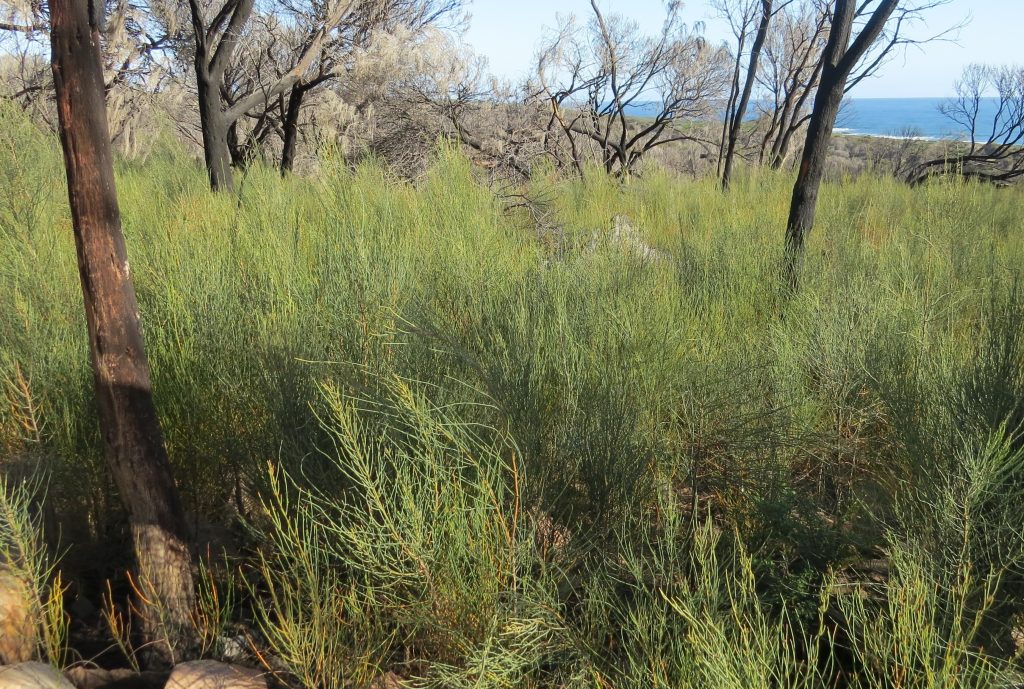
- She-oak regrowth (AS)
-
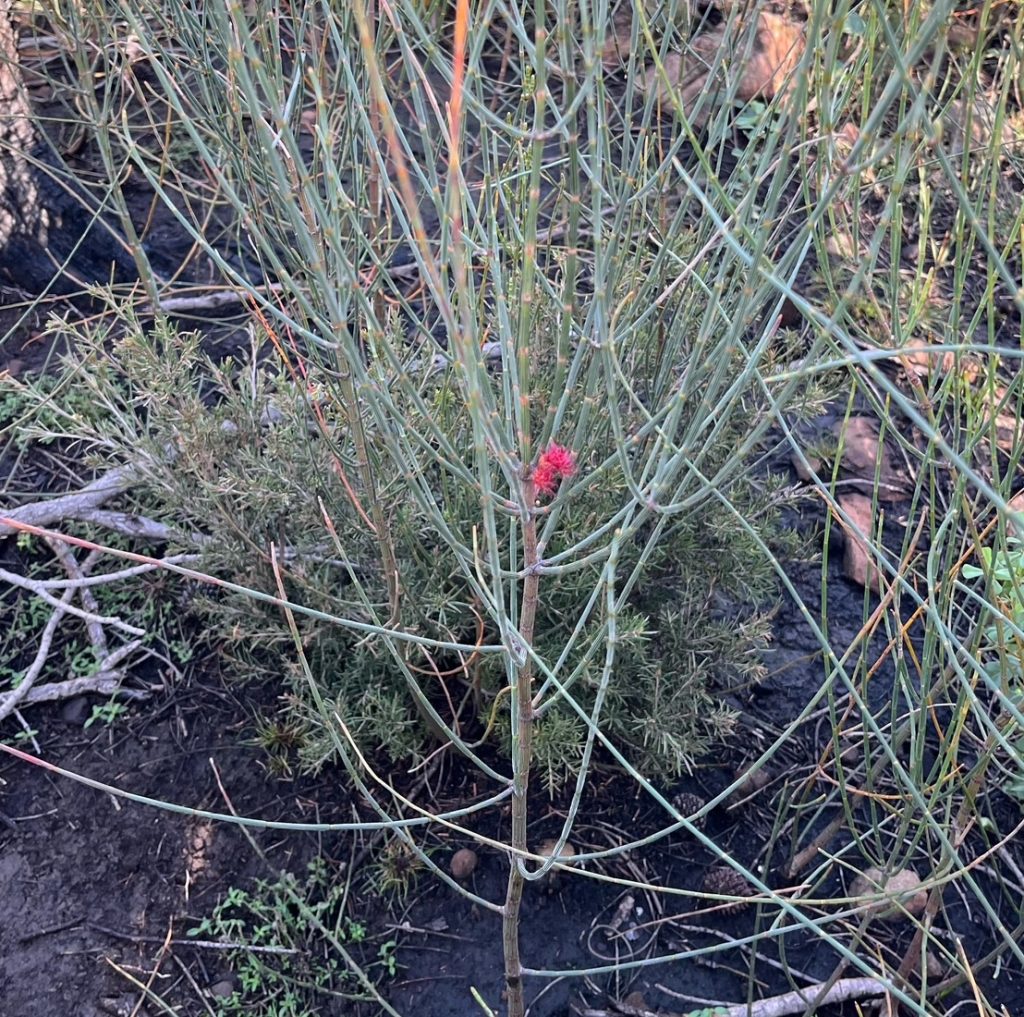
- Allocasuarina verticillata (she-oak) in flower at Waterhouse (LR)
-
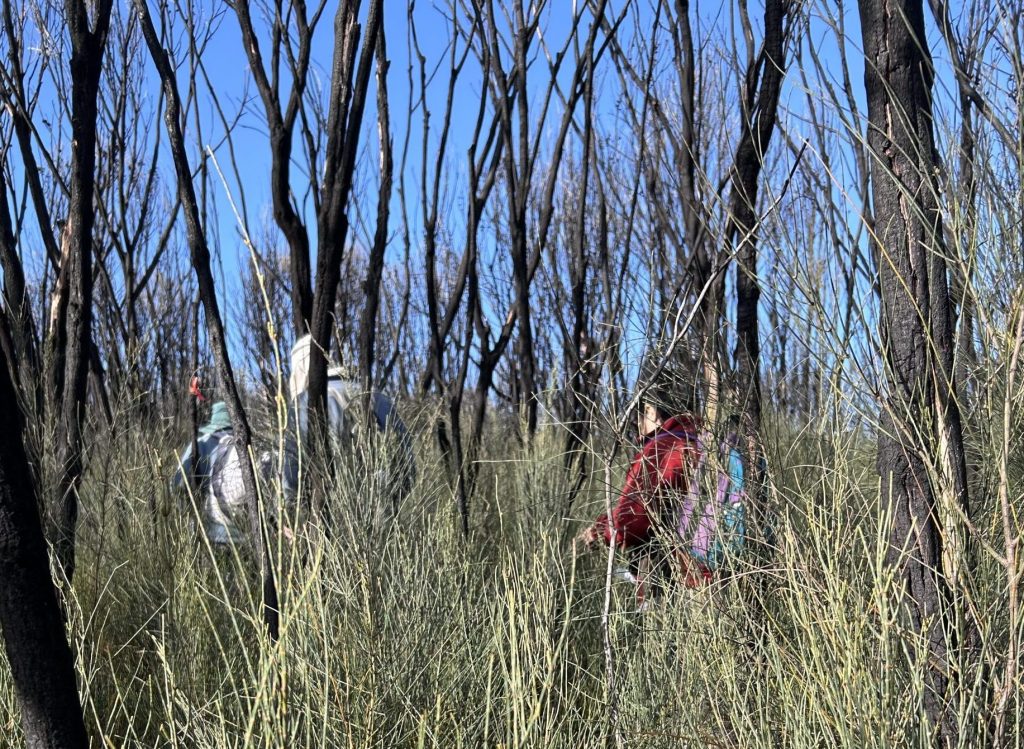
- Allocasuarina verticillata (she-oak) regenerating with vigor (PR)
We soon began wading through the dense blanketing of Allocasuarina that had grown 1 to 1.5 metres tall since the last fire in February 2024. Some big dead casuarinas still remain here but little else. In a few bare patches around dolerite rocks we saw young plants and seedlings of Tea tree, Pultanea, Aotus, Kennedia, Dodonea viscosa, Cheilanthes austrotenuifolia and Resurrection fern that were not yet swamped by the casuarina regrowth.
-
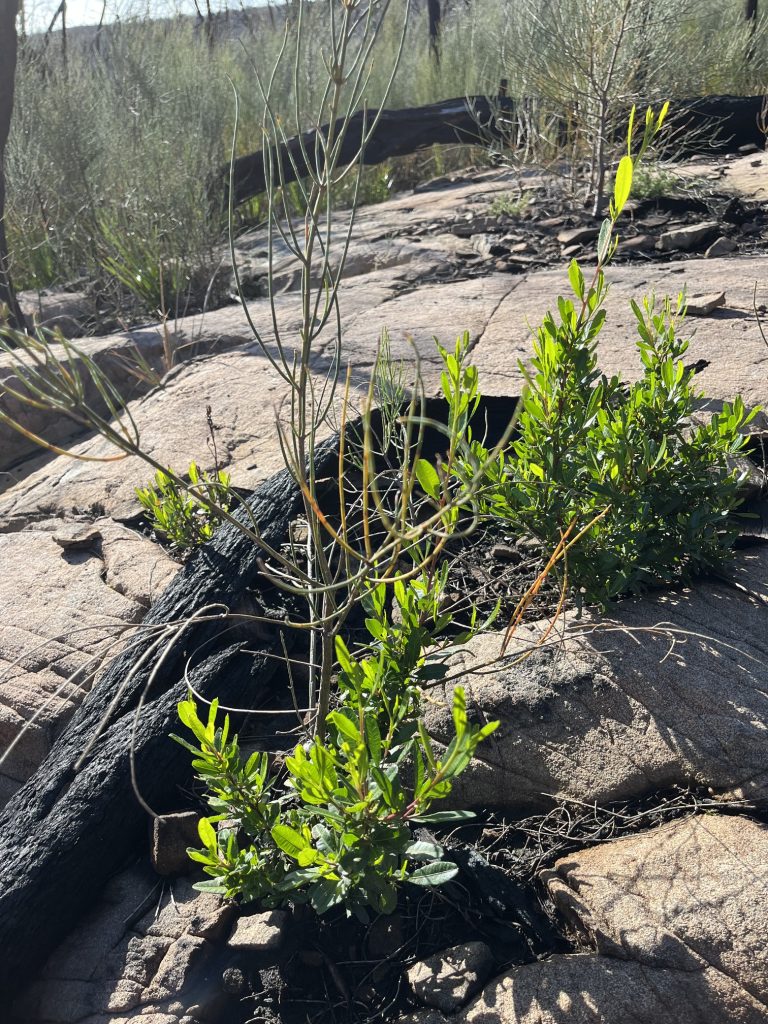
- Dodonea viscosa at Waterhouse (LR)
-
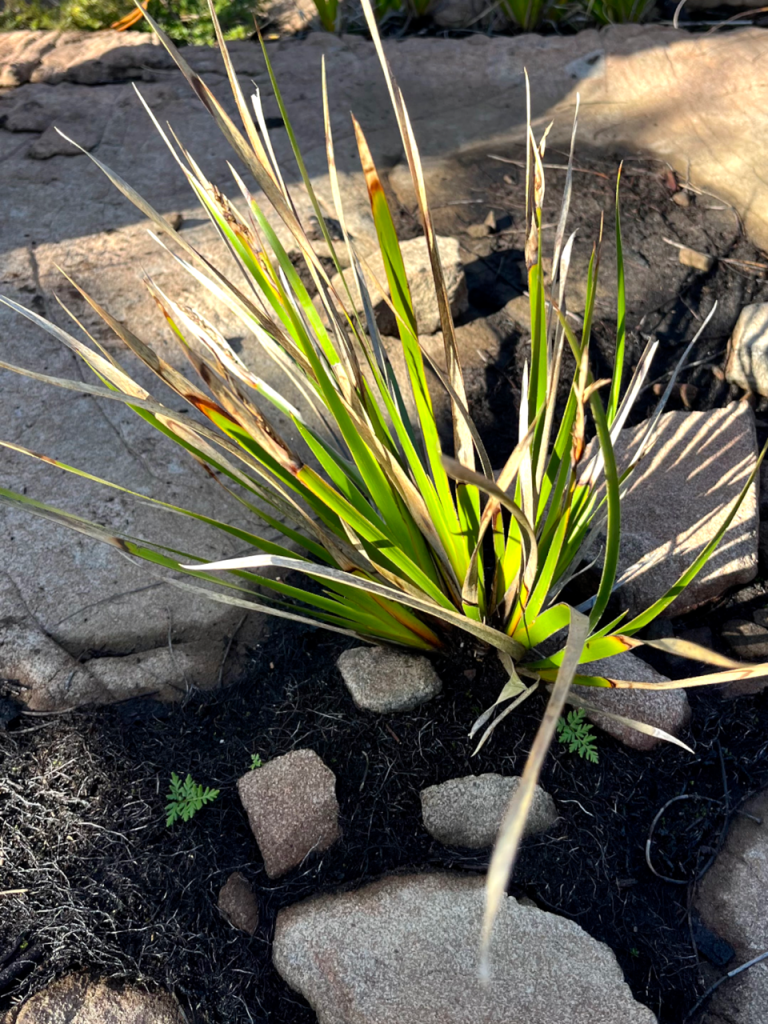
- Cheilanthes austrotenuifolia (Resurrection fern) in shade below Lomandra (LR))
Coming into the open and ascending the exposed second sand-dune we found the expected mixture of coastal heathland species. Platylobium, Hibbertia, Kennedia, Acacia sauveolens and Interestingly Acacia terminalis growing in close proximity; one with cream flowers and the other quite golden. Small banksias that had been burnt were re-sprouting, likewise the low growing casuarina. And towards the top we saw a significant number of leaves of the fire orchid.
-
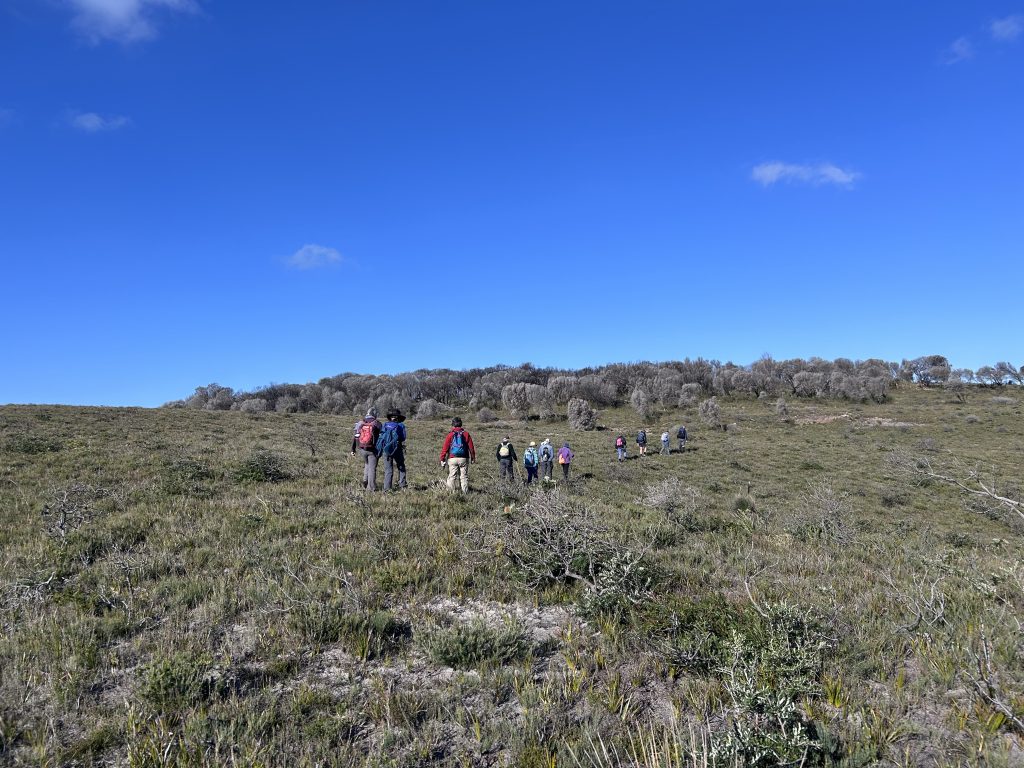
- Coming into the open and climbing to the Pleistocene Dune (PR)
-
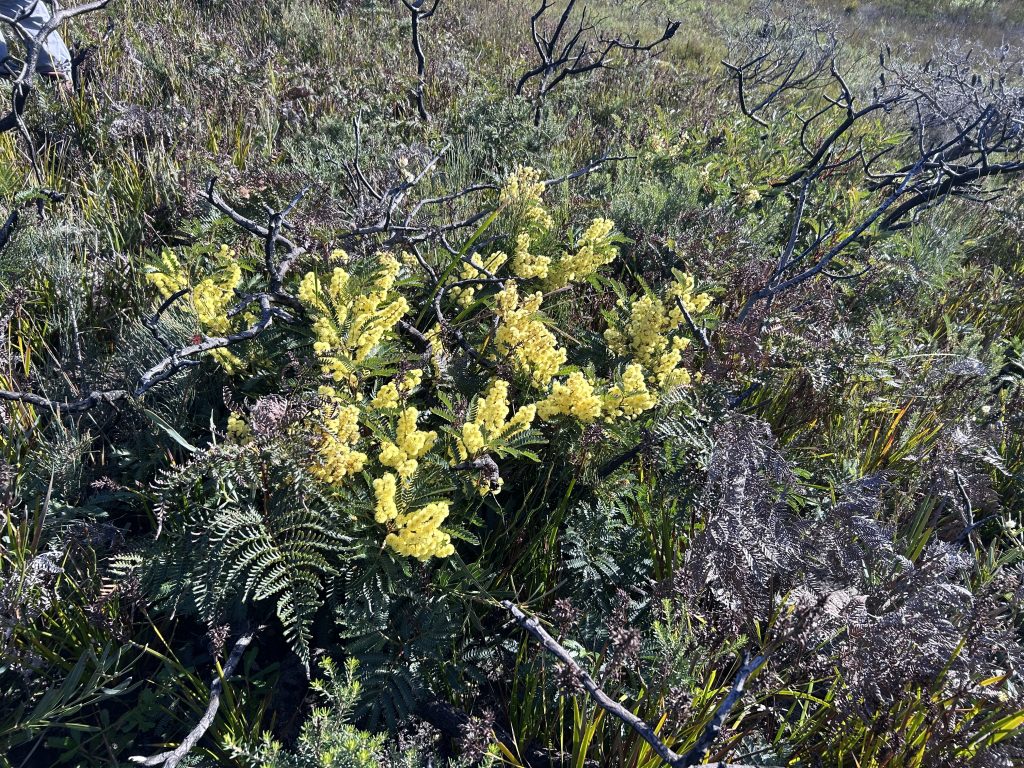
- Acacia terminalis at Waterhouse (PR)
-
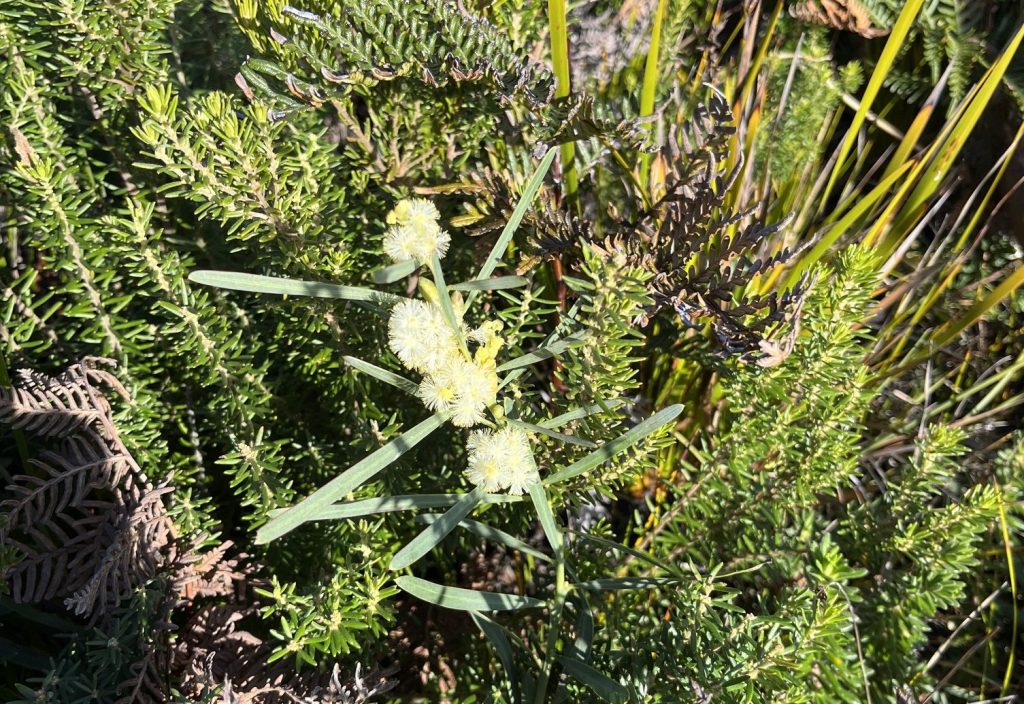
- Acacia suaveolens at Waterhouse (LR)
-
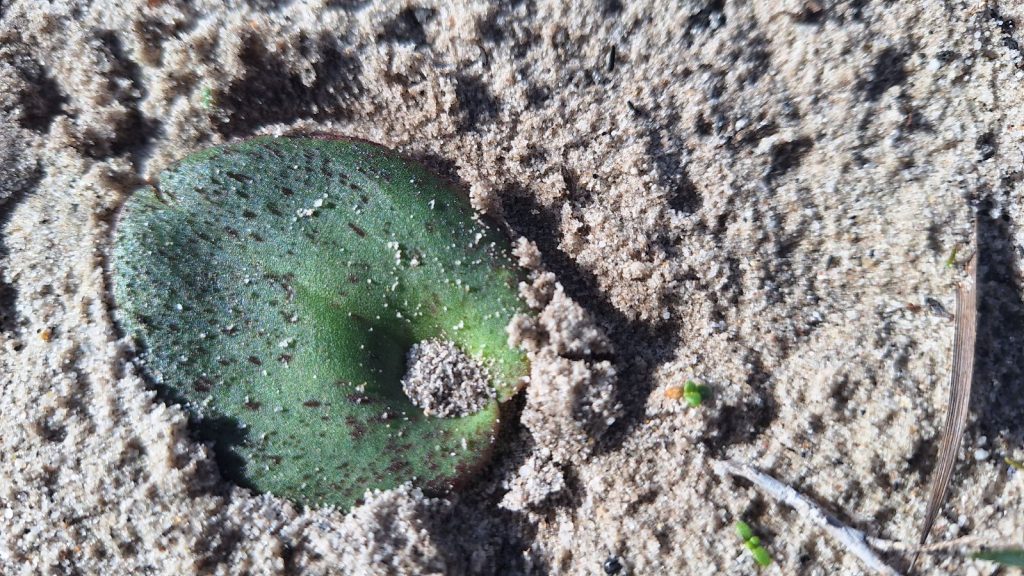
- Fire orchid leaf (CB)
-
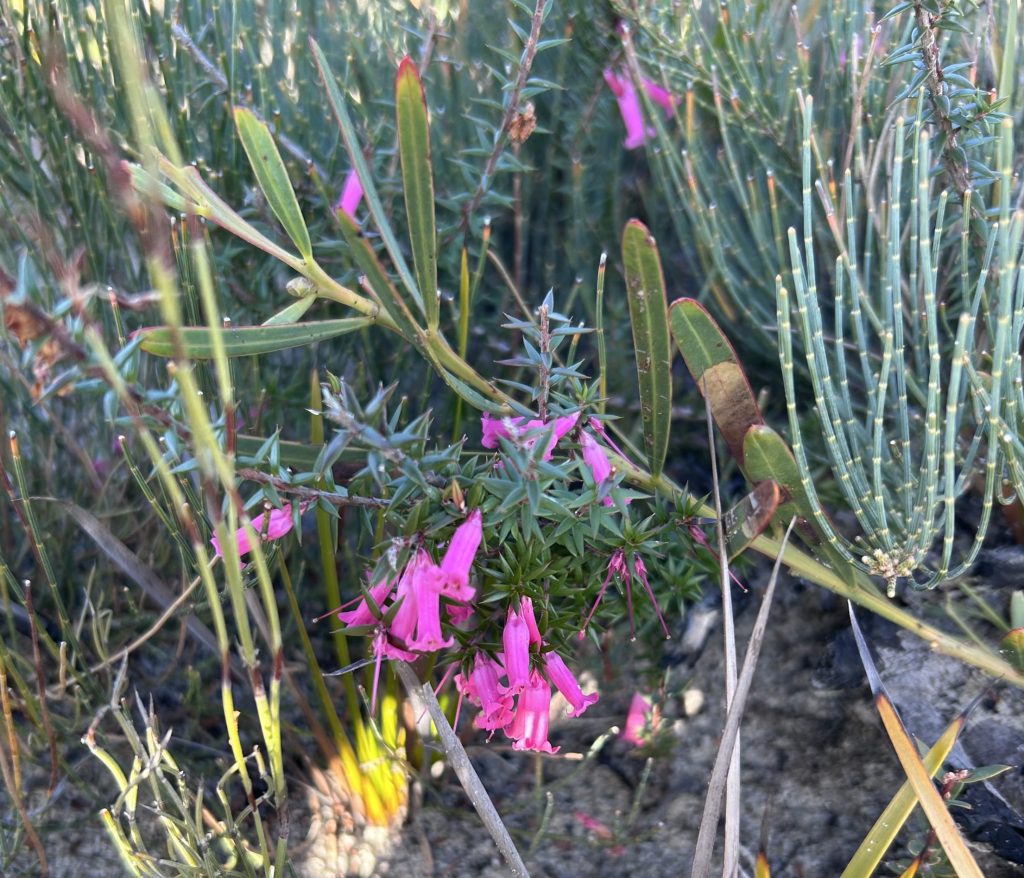
- Epacris impressa, Waterhouse (PR)
Comprehensive biological details of the area are provided in the 50 page NRE / Nat Parks Report 1995 available at https://nre.tas.gov.au/Documents/Biological-Survey-of-Waterhouse-Area.pdf
We lunched on the Pleistocene dune looking towards Mt Cameron.
-
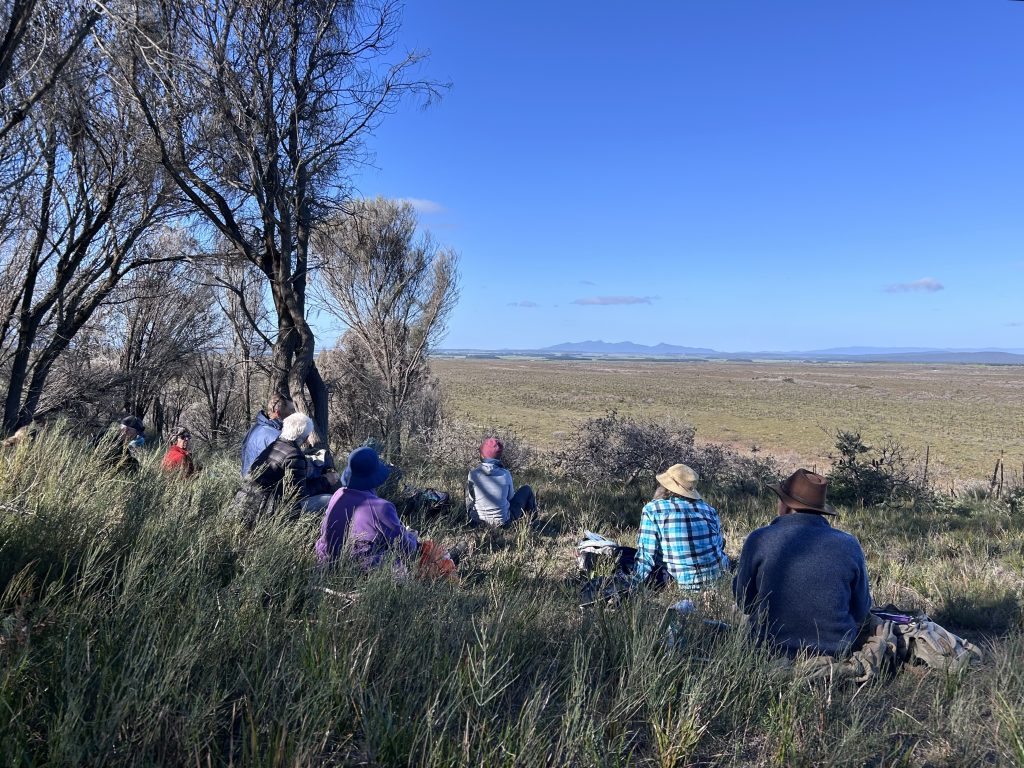
- Lunch with Mt Cameron in the distance (PR)
-
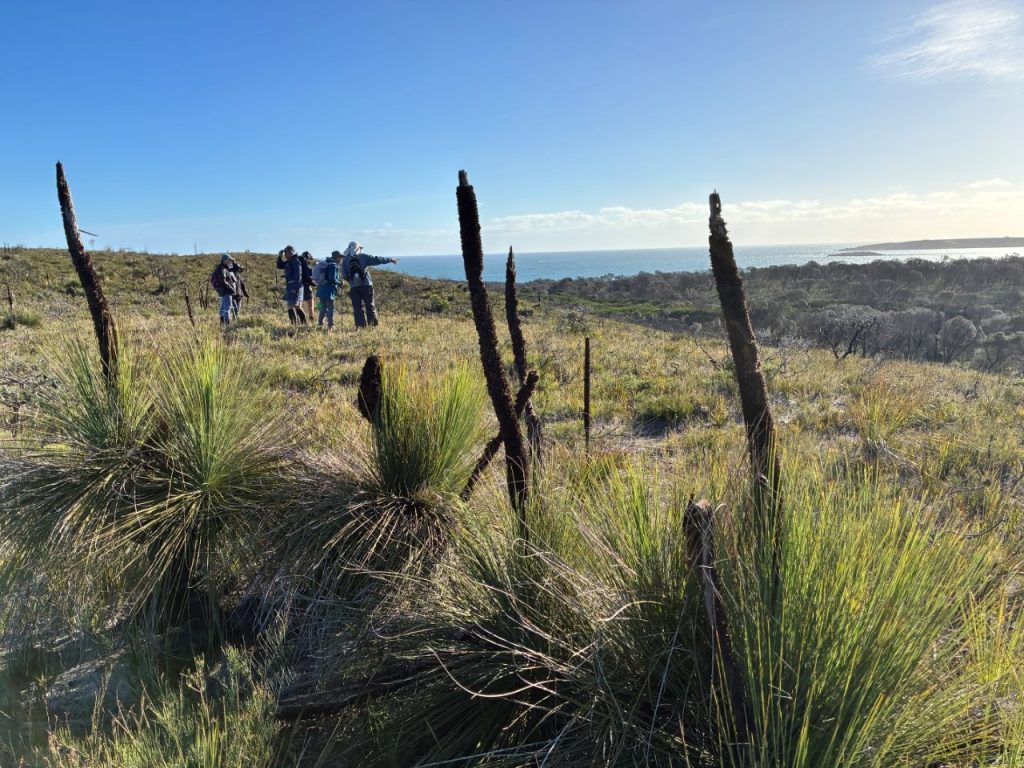
- Return leg of the walk (LG)
The return leg of the walk was along an ancient heath covered dune, a relic of the array of linear dunes established on the Bassian Plain during the last glacial advance that peaked about 20 thousand years ago during the Pleistocene epoch. Sea level was 120 metres lower than at present, so much of Bass Strait and the coastal flats such as the Waterhouse Plain existed as a cold, windy desert – the Bassian Plain.
Members were pleased to see a vigorous regrowth of the healthy vegetation on the dune. These old dunes are a geomorphological feature of national significance.
It will be well worth a visit in Spring. Central North Field Naturalists have planned to visit the Waterhouse Reserve on 7th November and it is hoped that members of NE FN will accompany them.
Postscript by Len:
-
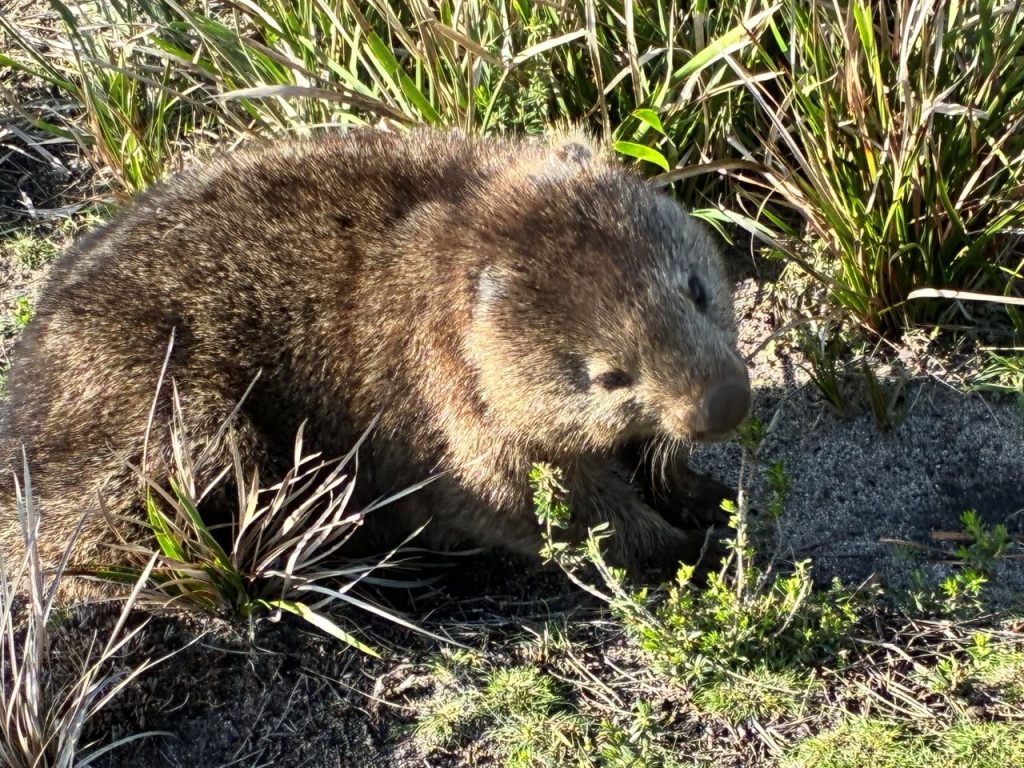
- Waterhouse wombat (LG)
-
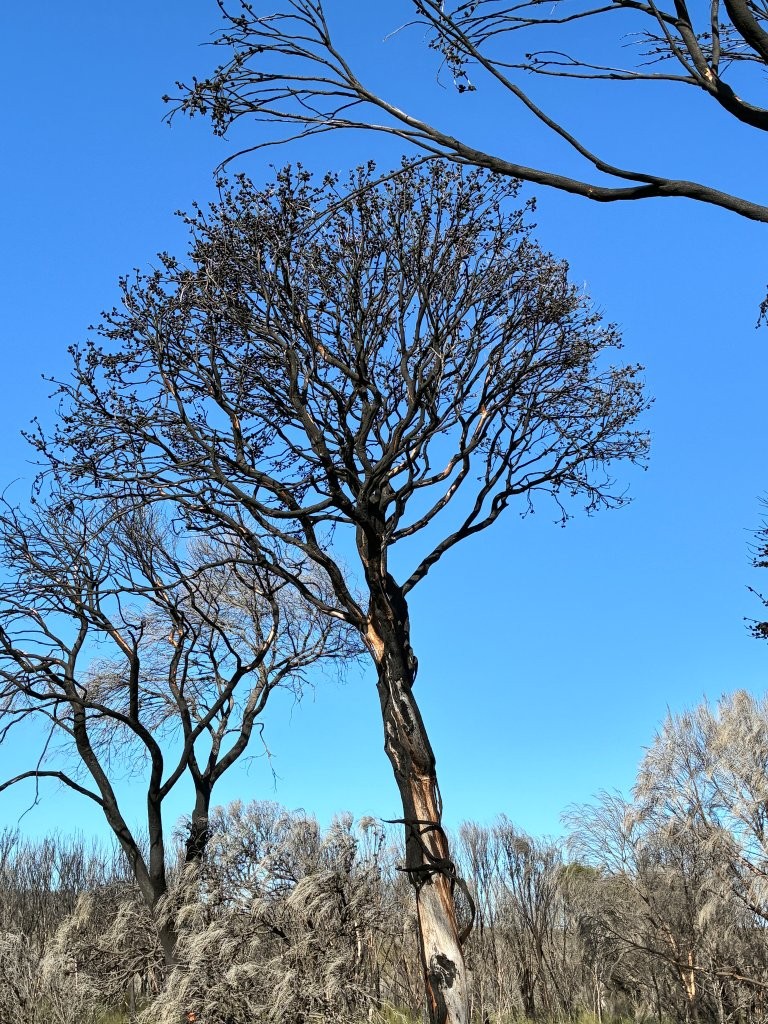
- Allocasuarina verticillata (Sheoak) Waterhouse (LG)
-
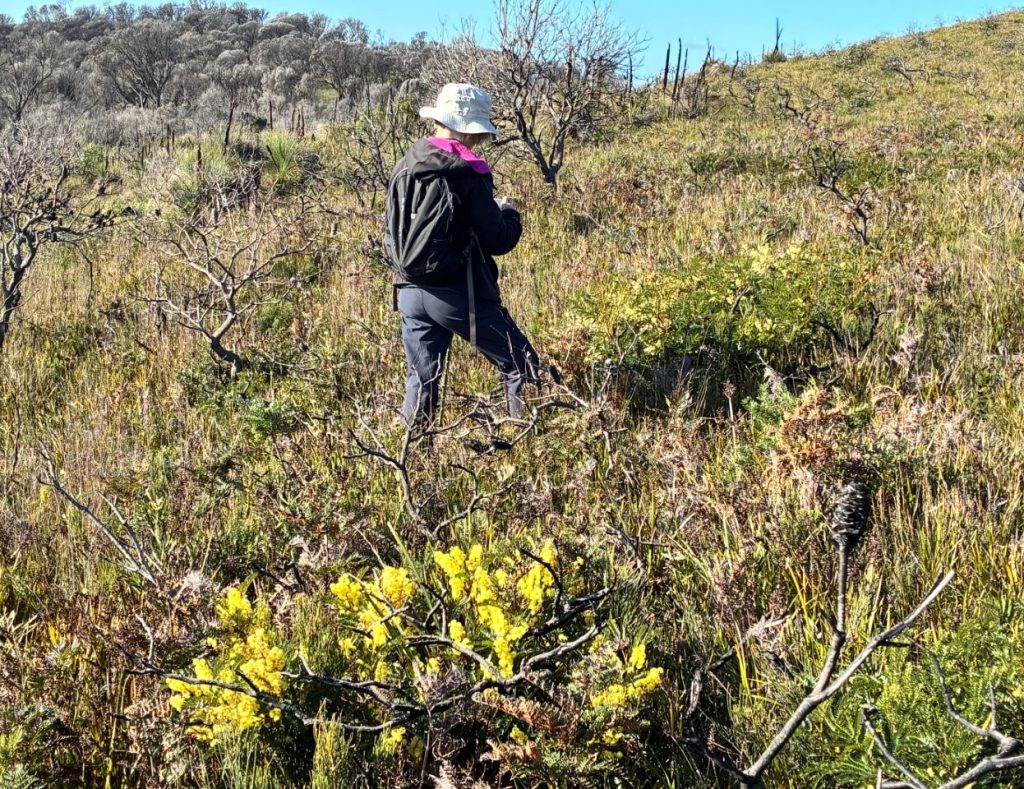
- Acacia terminalis and Penny, Waterhouse (LG)