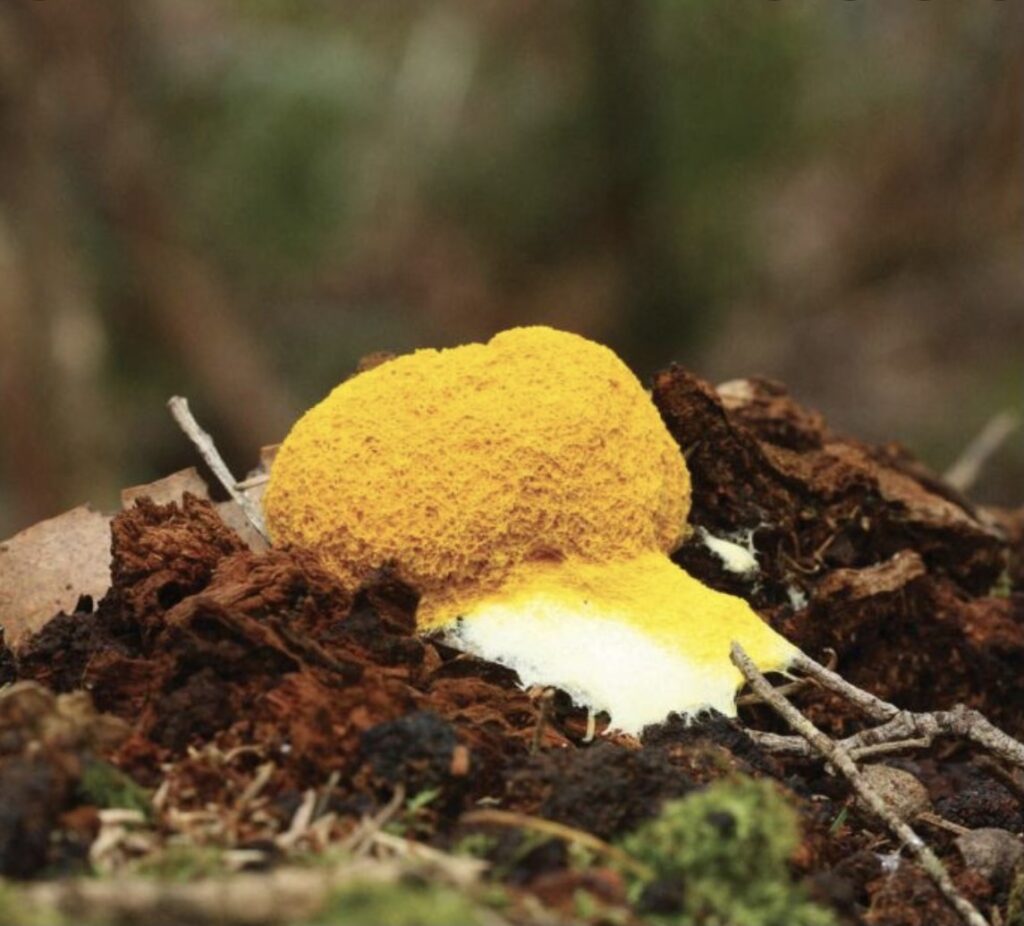
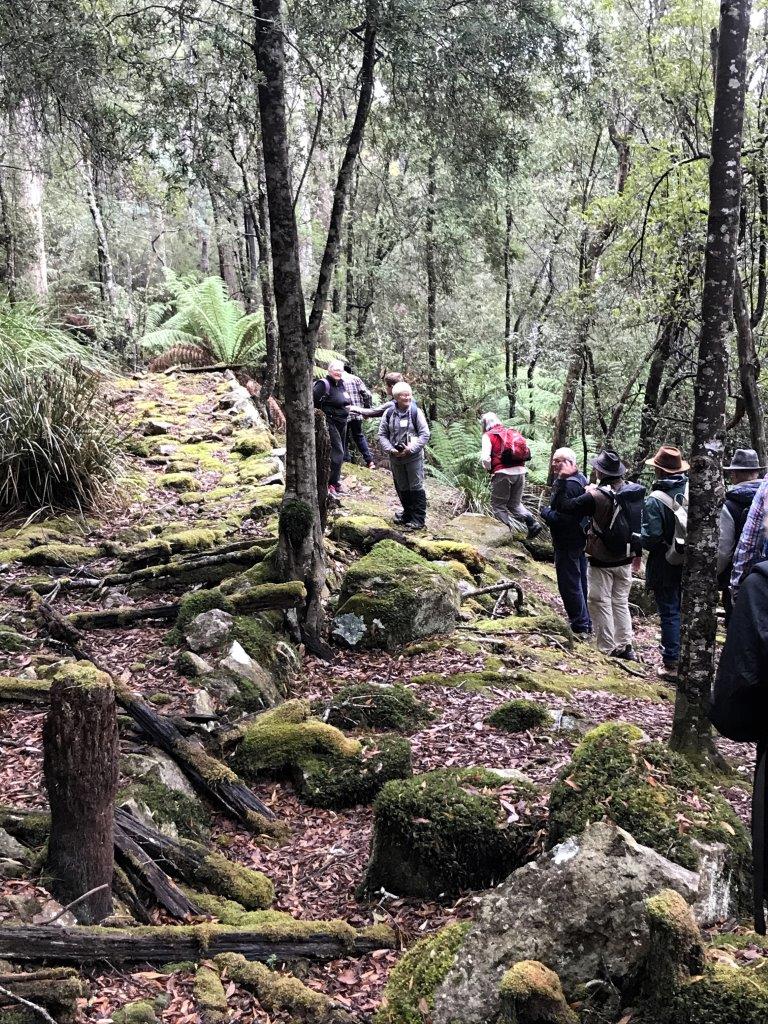
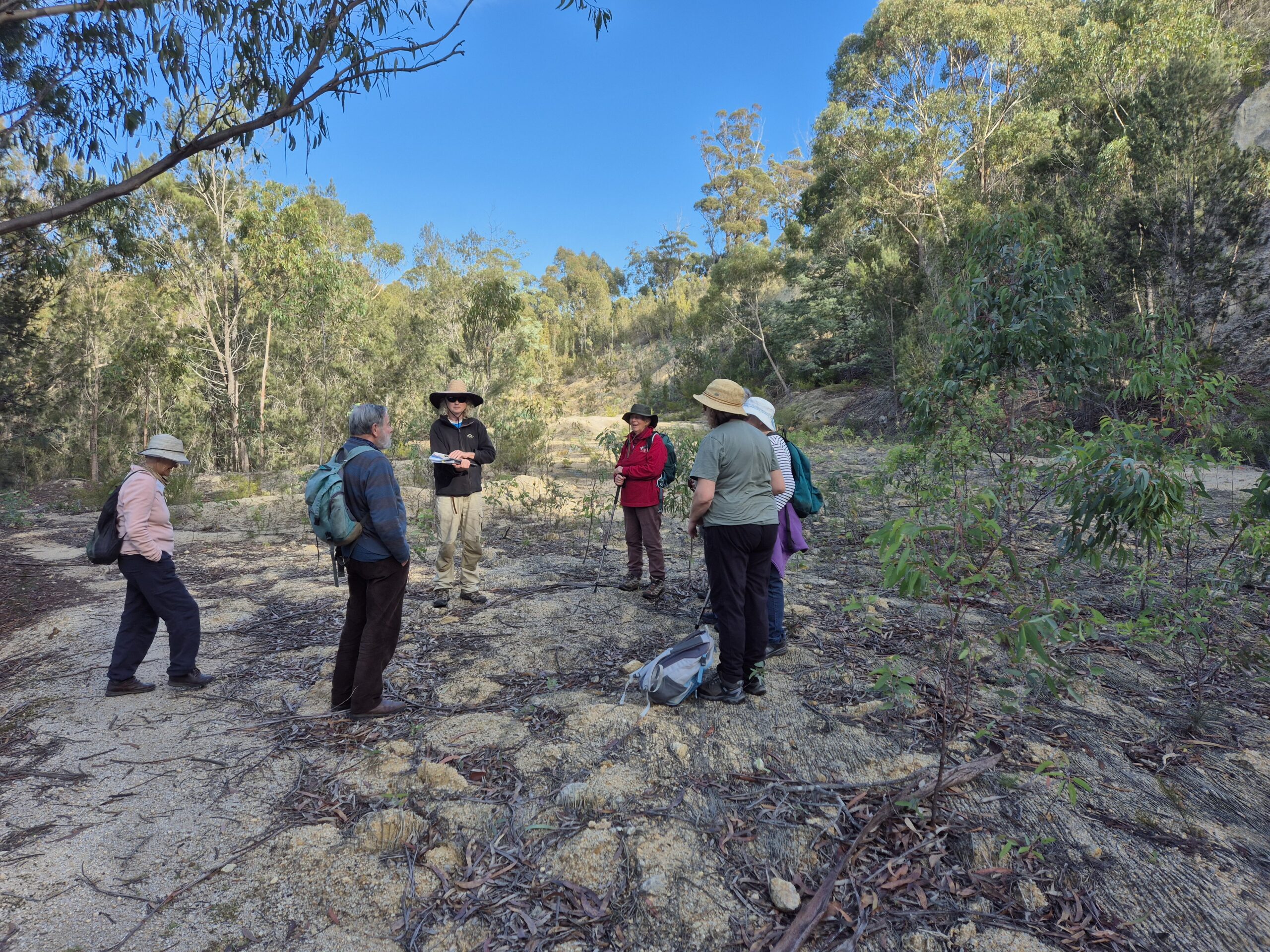
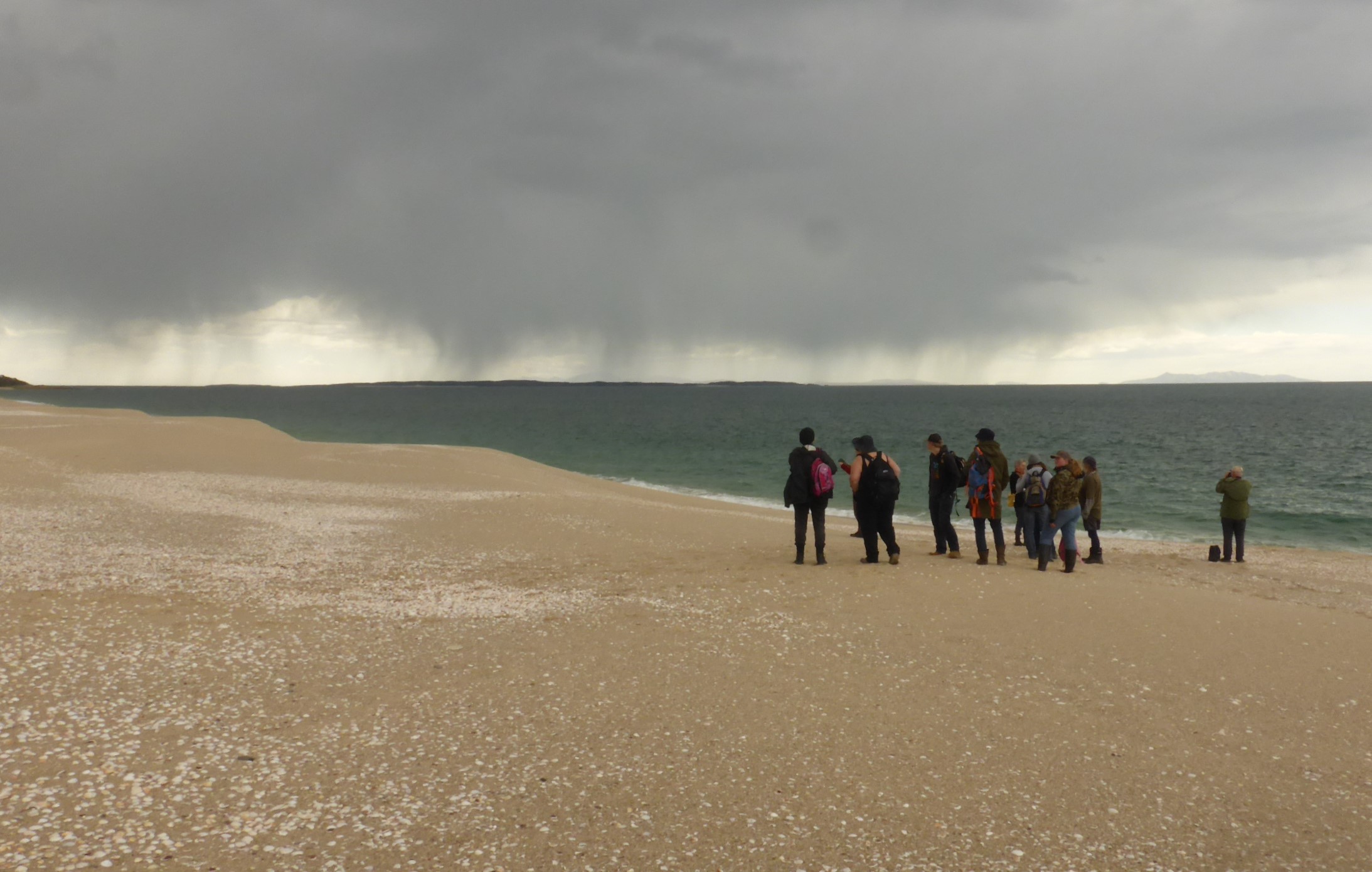
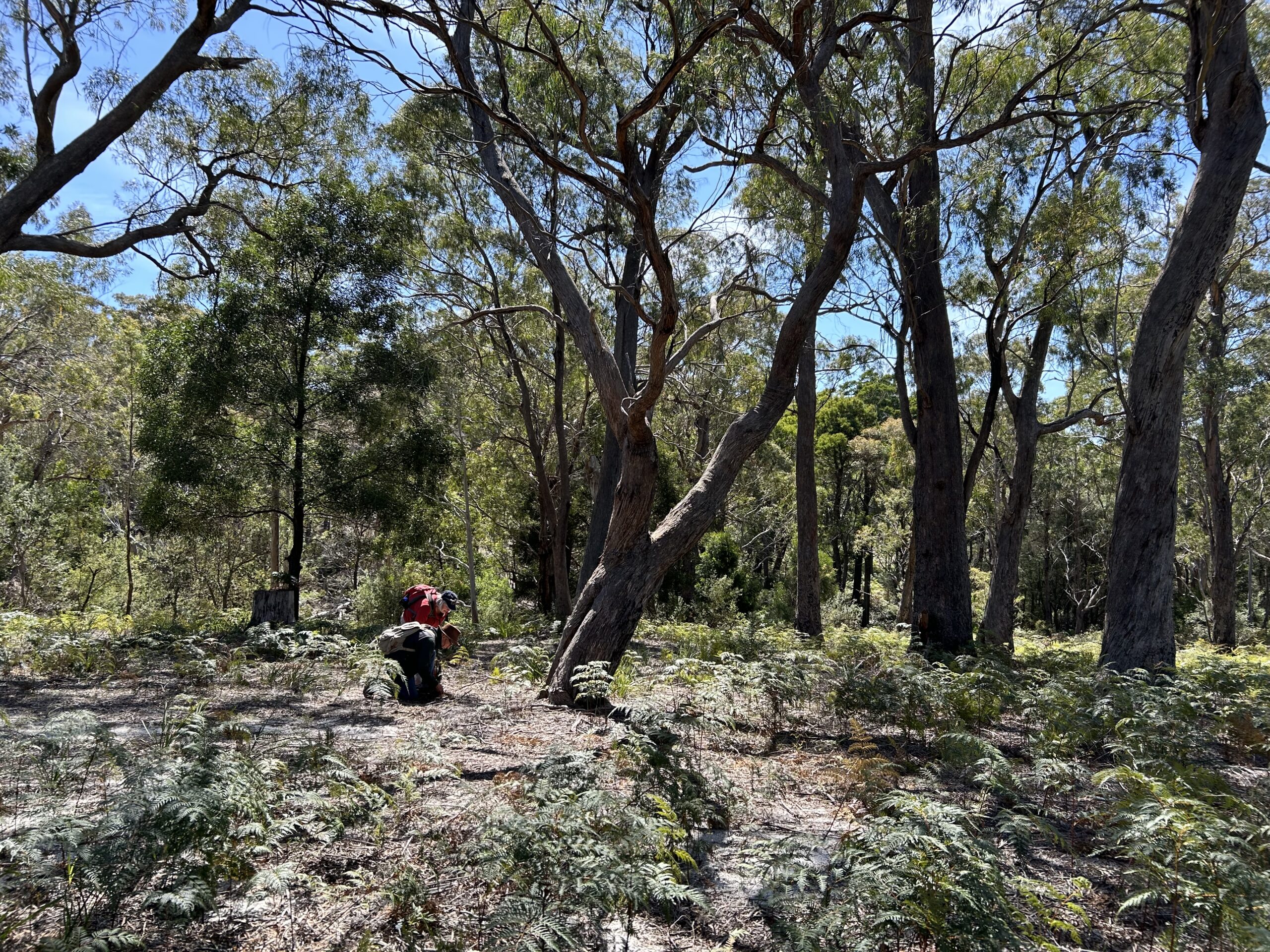
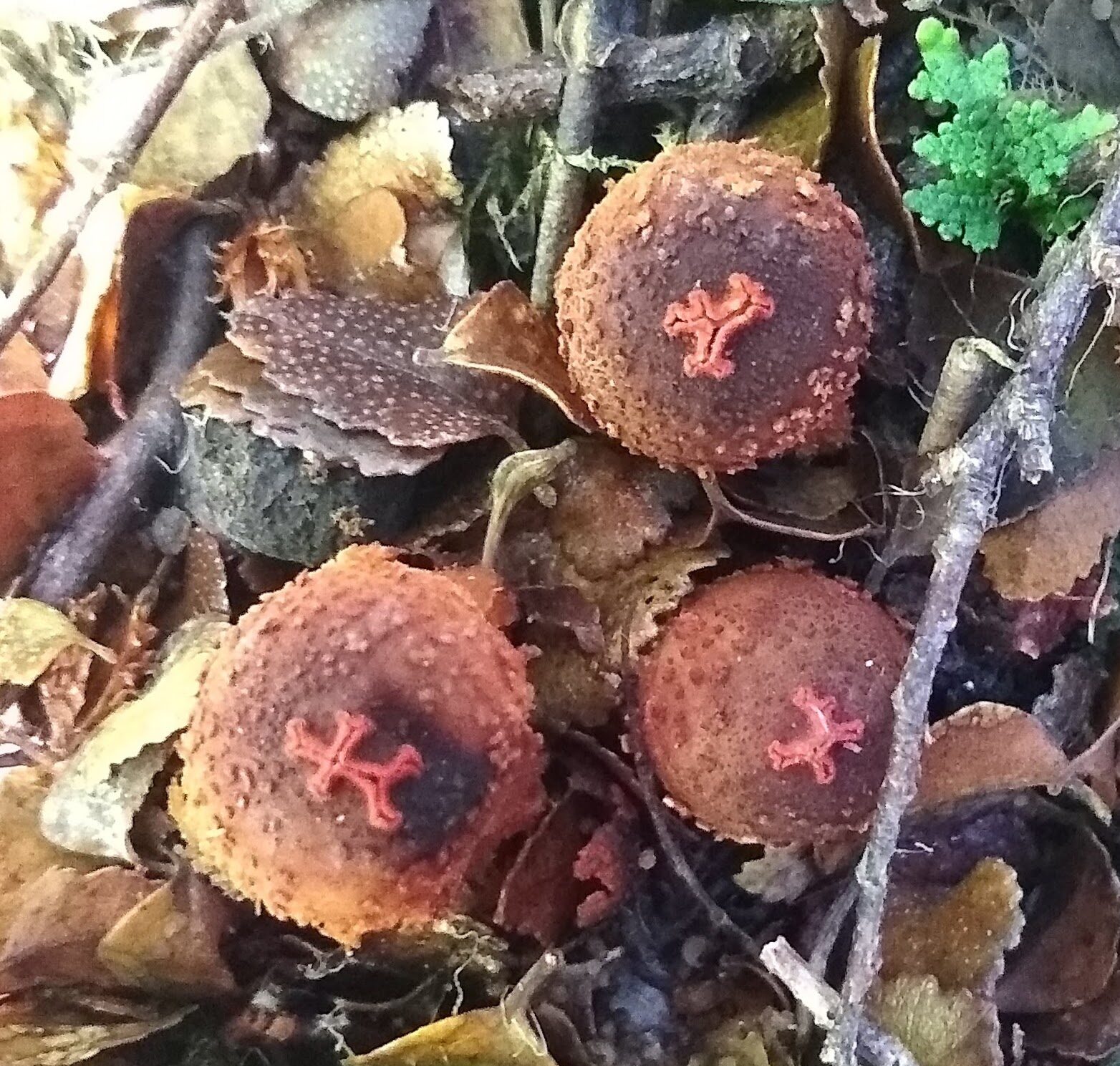
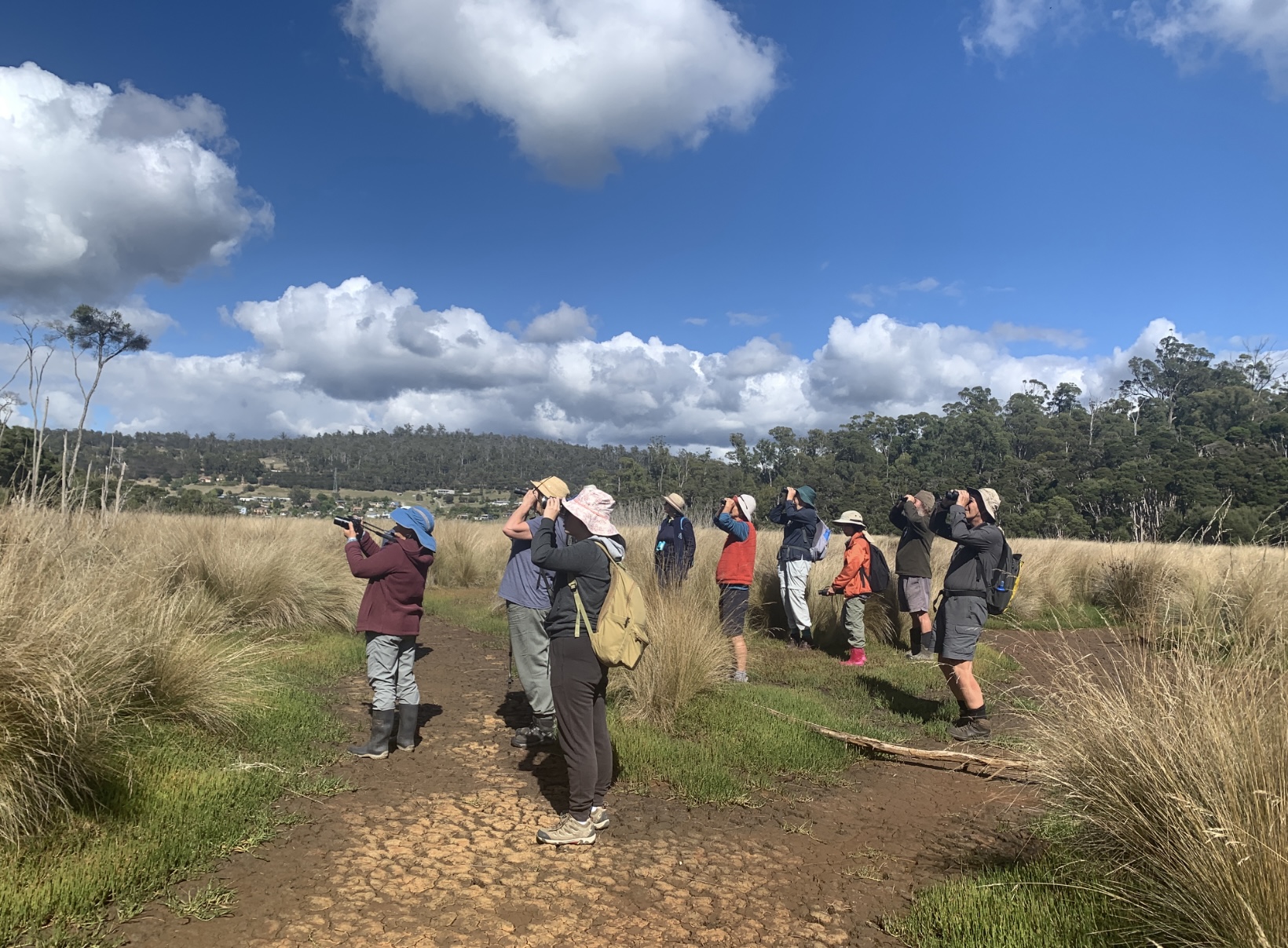
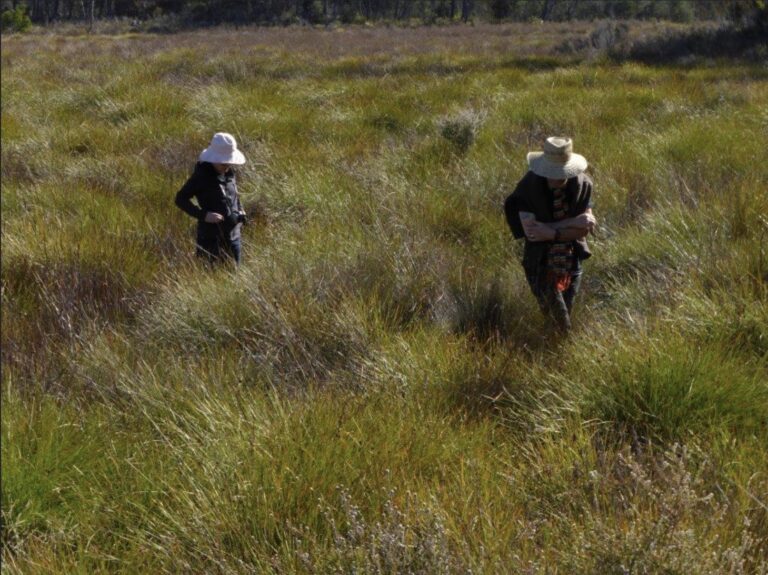
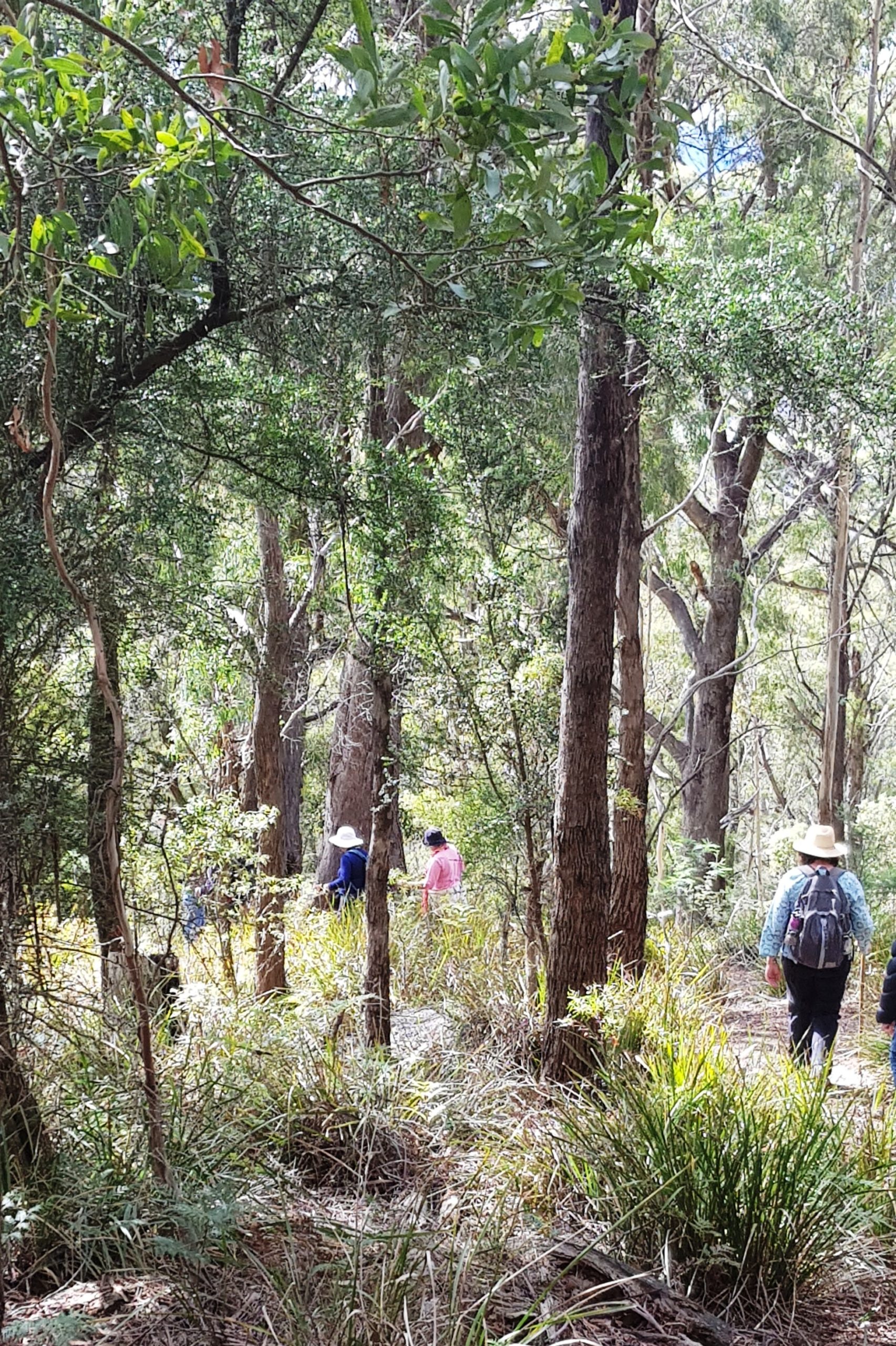
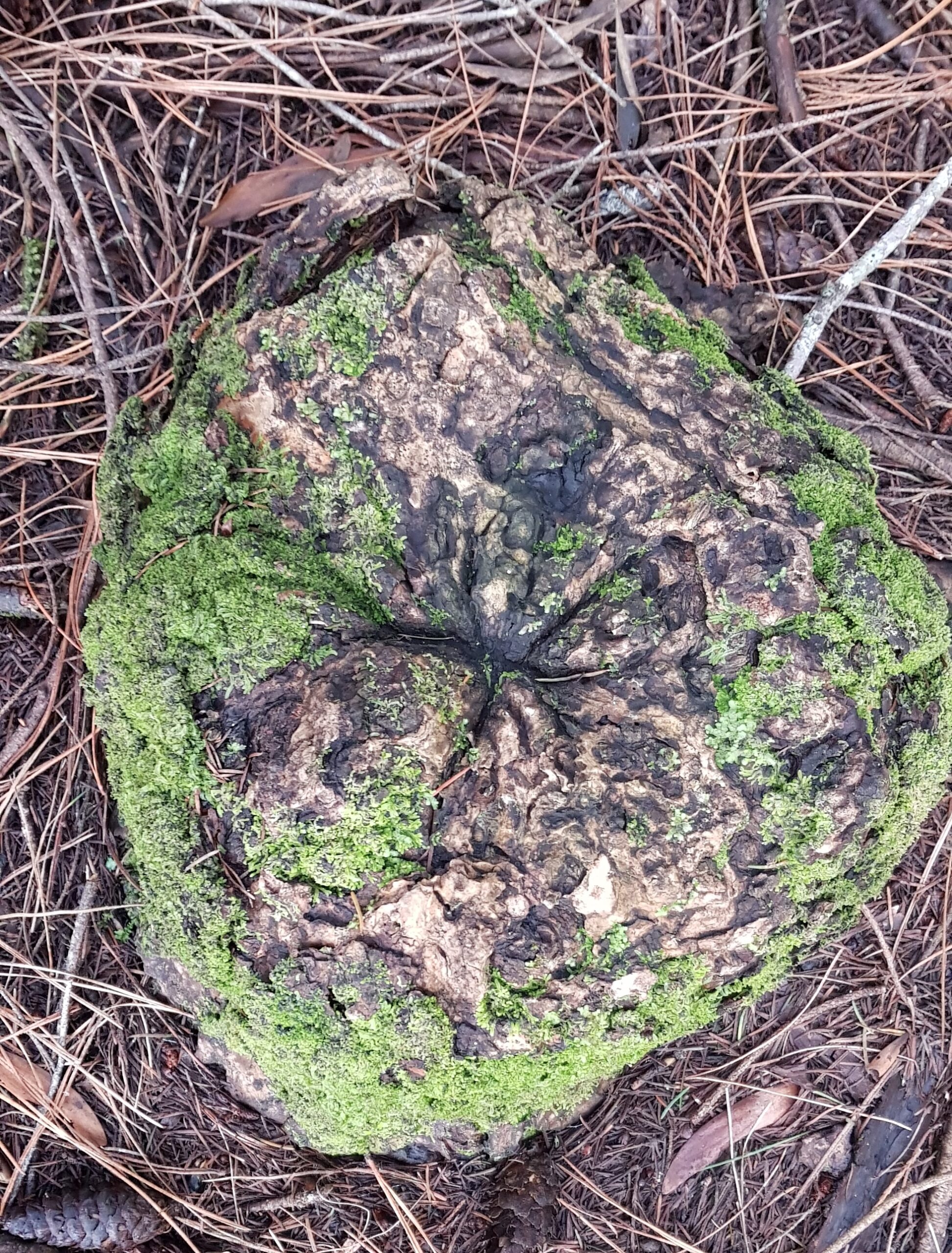
Birds: Button quail, yellow-throated honeyeaters, and golden whistlers. Slime moulds on rotting logs and stumps, moist and often brightly coloured
April
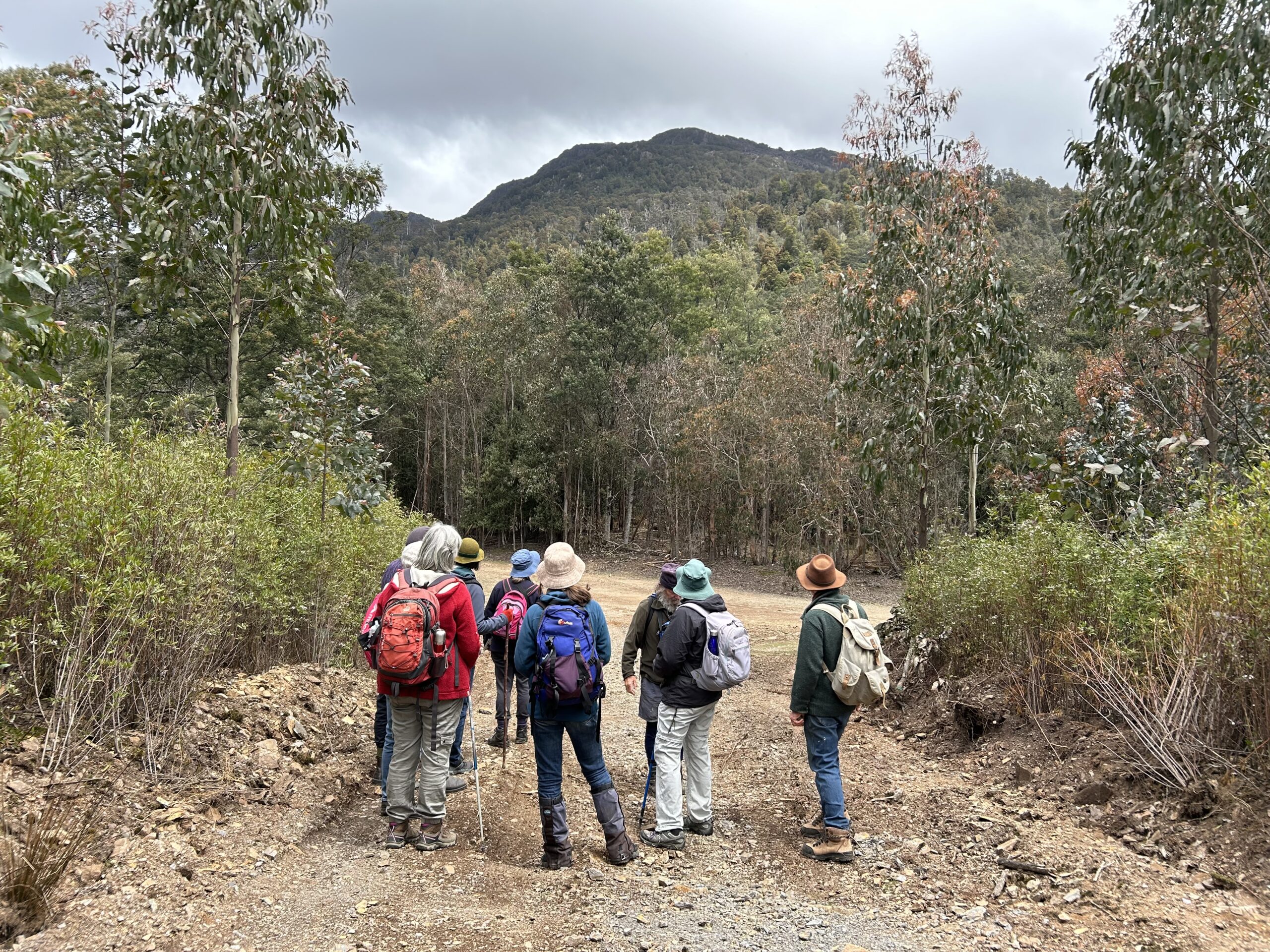
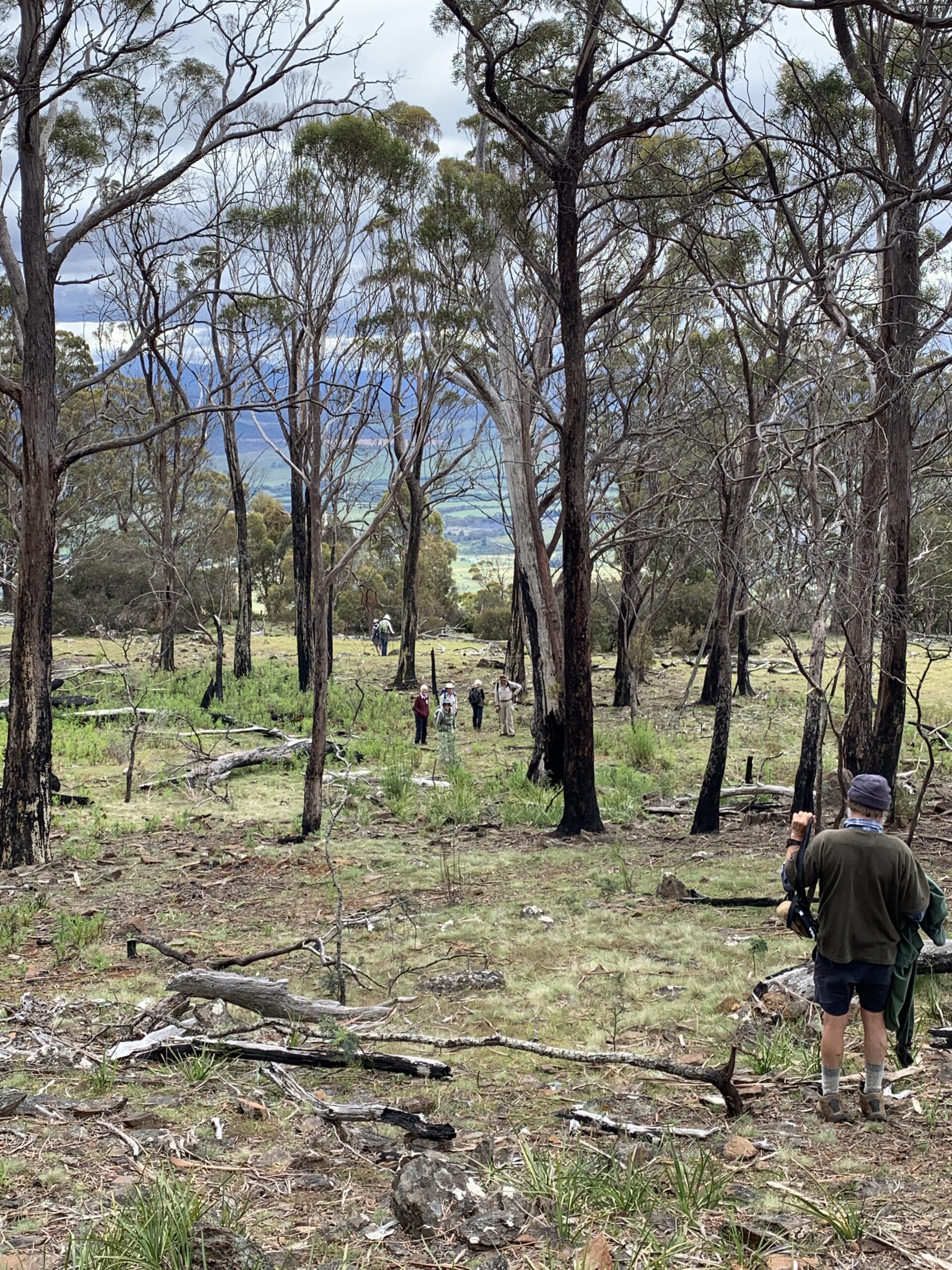
Mt Stronach
May
Waterhouse Conservation Area lead by Mike Douglas
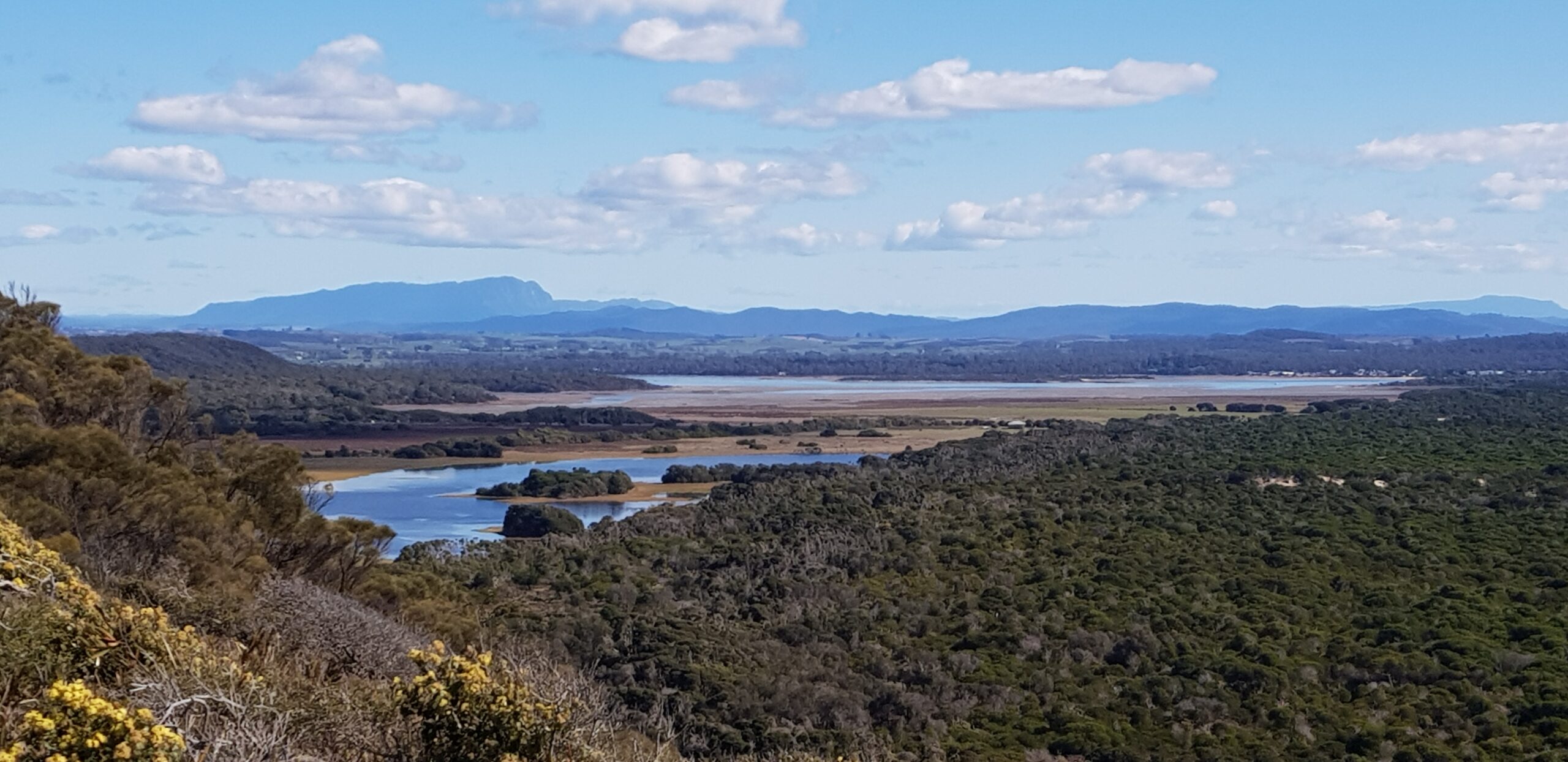
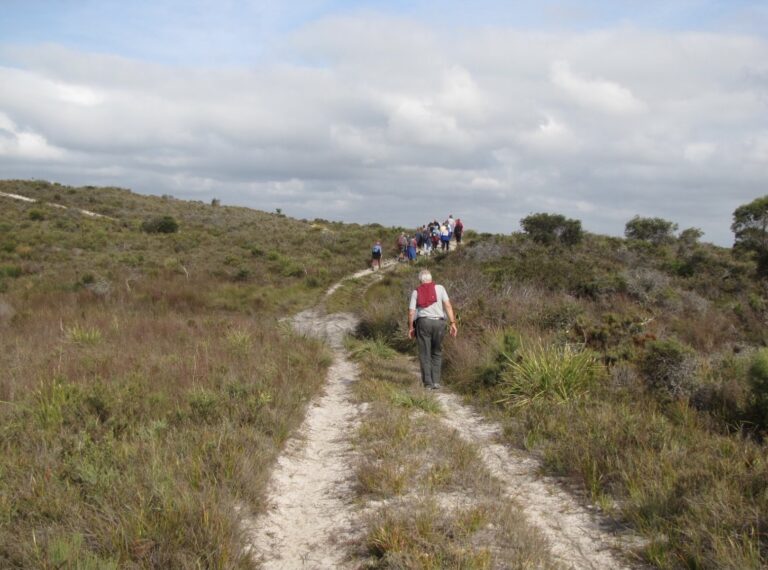
From the top of Hardwickes Hill a birds-eye view of the Reserve and Waterhouse Island. Clearly discernible are the linear Pleistocene dunes formed during the last glacial advance, at its peak 20,000 years ago. The main objective of the day was to look at the salt-resistant plants (halophytes), most belonging to the saltbush family.
June
Mt Scott
July
Waterhouse
September
In the Fingal valley
At Evercreech Reserve are the giant Eucalyptus regnans, the tallest tree species in Australia. We looked at the impressive Mathinna Falls, then made our assault on Mt Young.
October
Federation Weekend
Mt Cameron and Cape Portland
November
Cascade River
Exploring the Chinese history in the area between the Cascade Dam and Mt Paris Dam.
Craig Searle lead this fascinating circular walk which follows various old roads, marked tracks and creek-sides, through mature myrtles to a 810m summit boasting 360 degrees views. Click here for the report and lots of photos from the day
February 10th, Narawntapu
Anne Witherden lead an exploration of the Narawntapu National Park near the Rubicon River and the Asbestos Range.
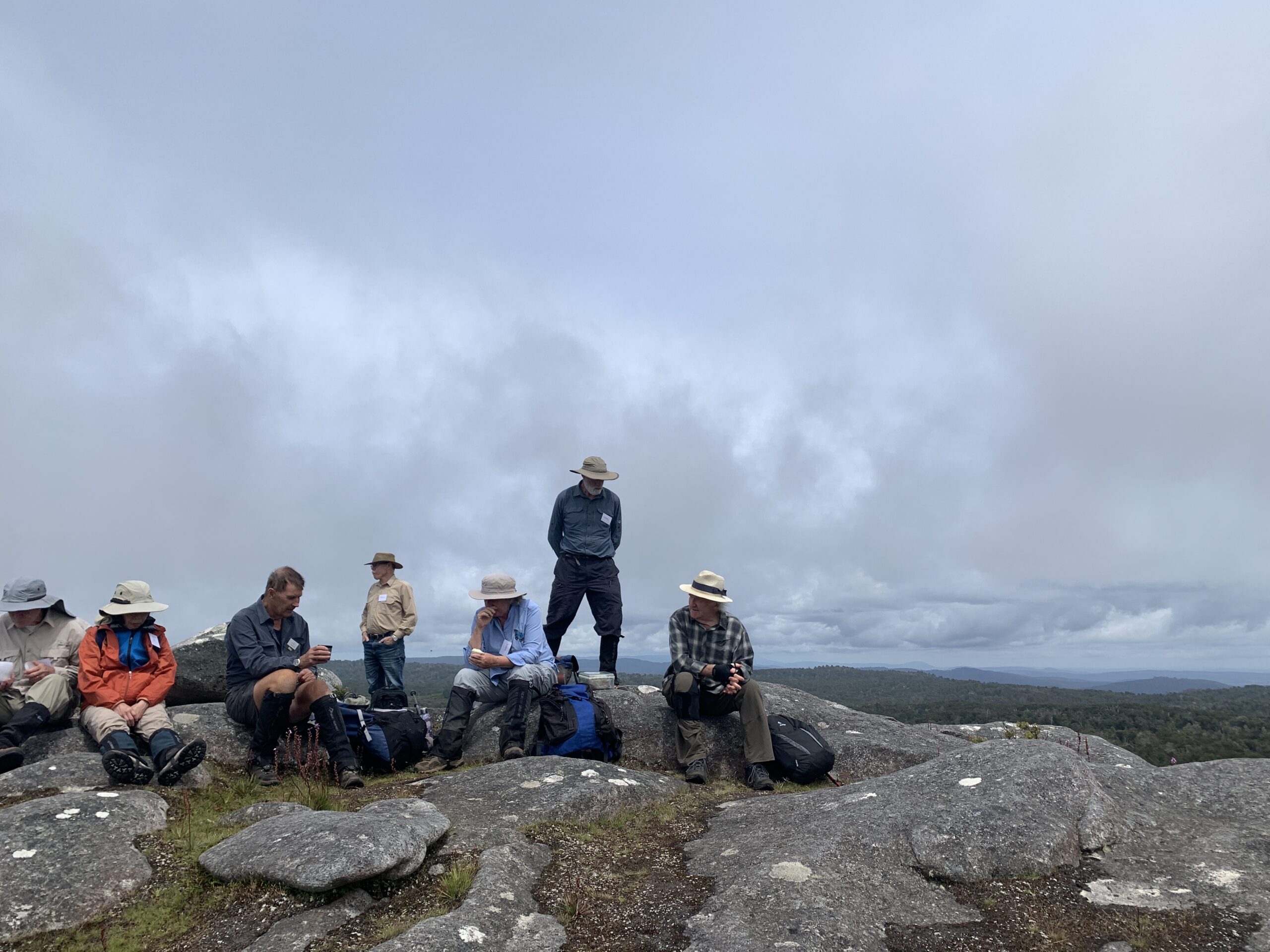
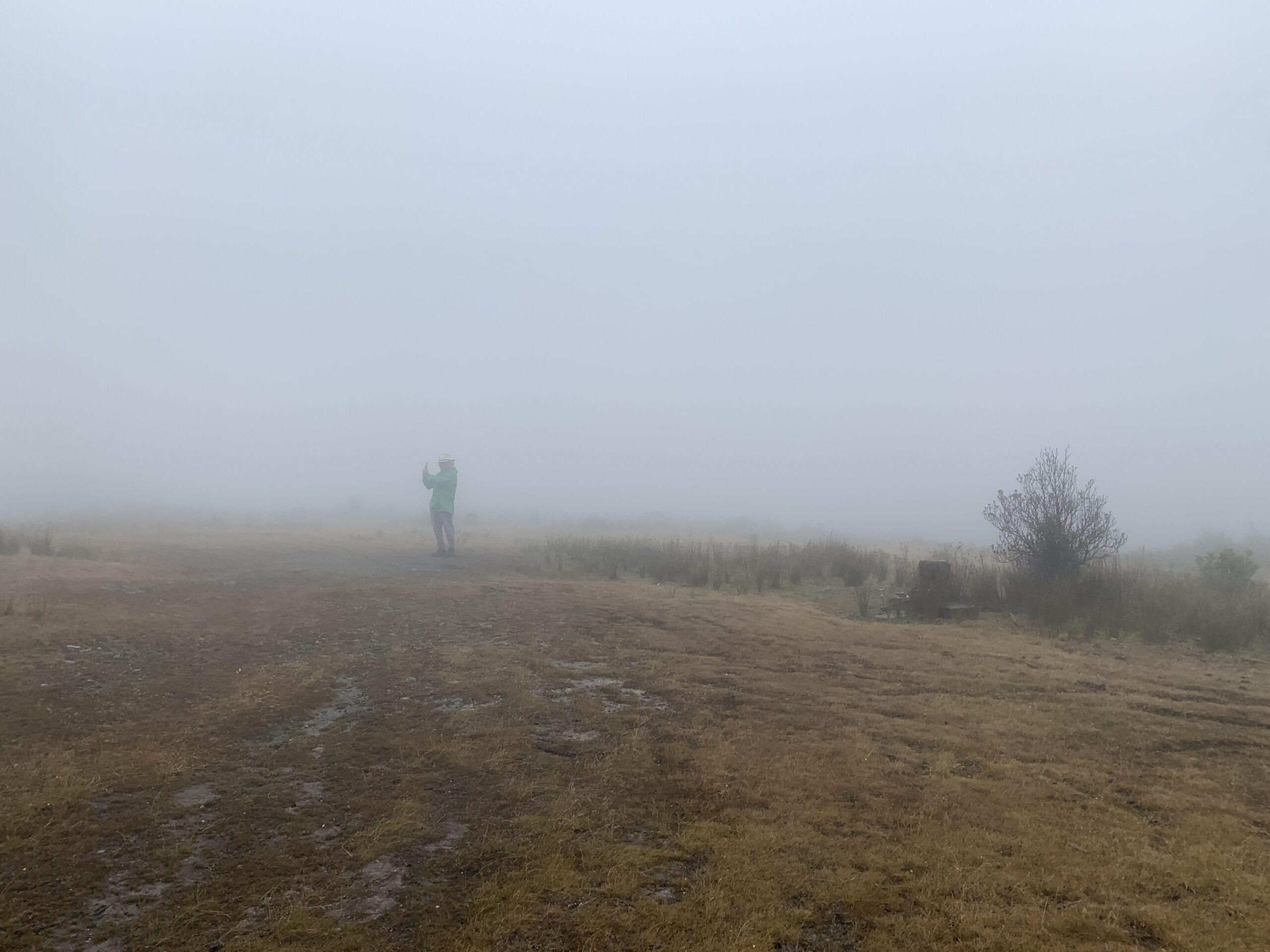
A visit with Mike to the top of Mt Horror on a very murky day, and then to the historic areas of Forester and Pearly Brook. Here’s the report
April 13th East Sandy Point
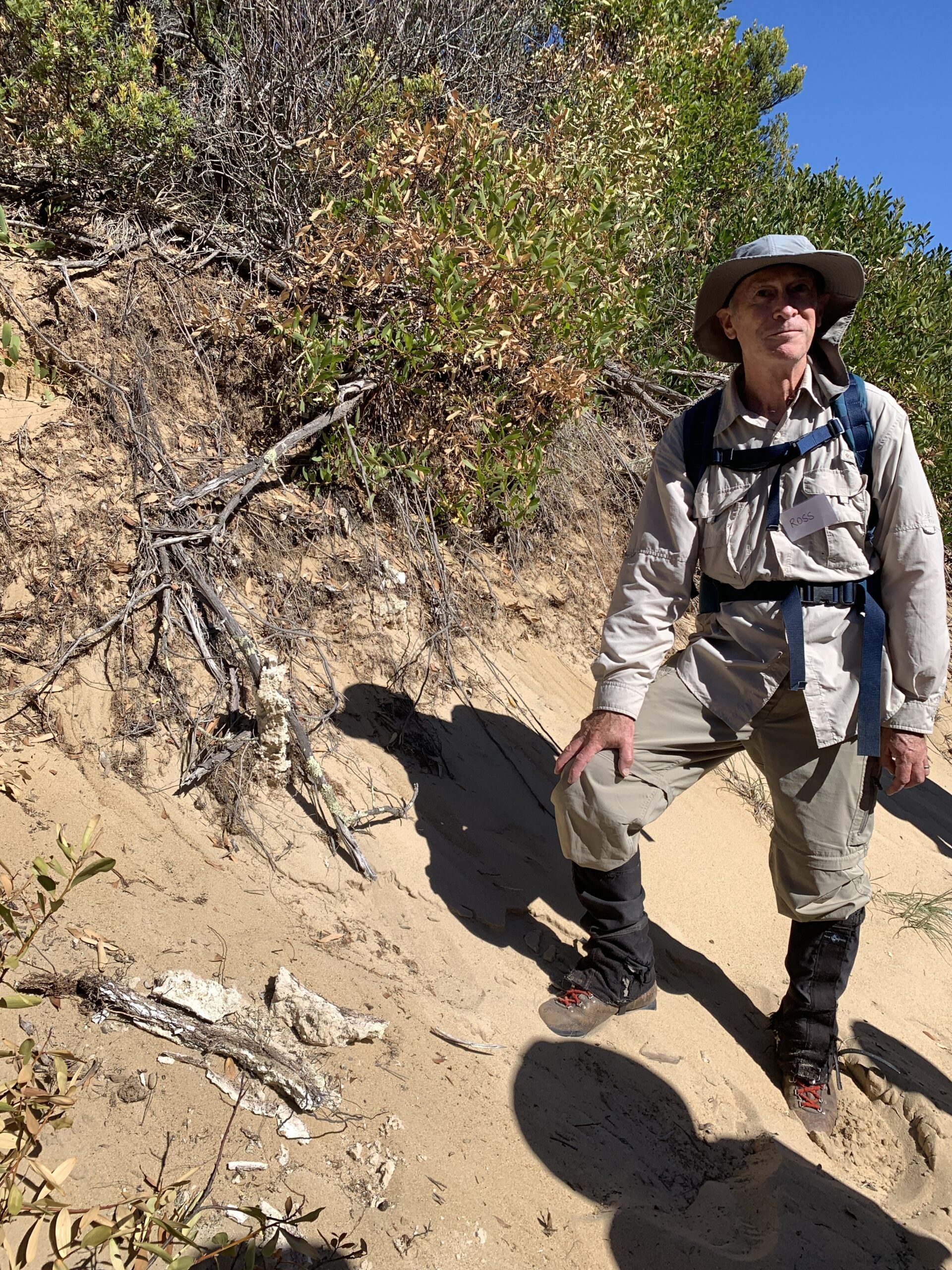
Ross lead us on an expedition to East Sandy Point, part of the Double Sandy Point Conservation Area. We explored the dunes and discovered rhizoliths, structures formed when a root becomes encased with calcium carbonate and then exposed when wind blows away the sand. Here’s the report, and photos
Ross among the rhizoliths
May 11th Briseis Water Race: Flumes and fungi
Lloyd lead us on a 10km walk along the remains of the race, built in 1902 to transport water from the Ringarooma River to the Briseis Tin Mine at Derby. There were a lot of fungi too. Here’s the report
Field Nats and flume remains (LG)
8th June Sloop Lagoon and Big Lagoon
Led by Alex, the group botanised, learning the history of the area and listening to local environmental hero, Todd Dudley, explain his revegetation of a degraded landscape. Here is the report
Todd talks to the group near Sloop Lagoon
14th September
Cape Portland, Musselroe Wind farm
Highlights were seeing the technology at work to protect the Wedgetail Eagle and White bellied sea eagle from the blades of the turbines. And the discovery of two orchids. The report is here.
12th October
Orchid hunting at Ansons Bay
A very pleasant walk along the bay and the river and on the tracks above. At least 10 different orchids were found. Here’s the report
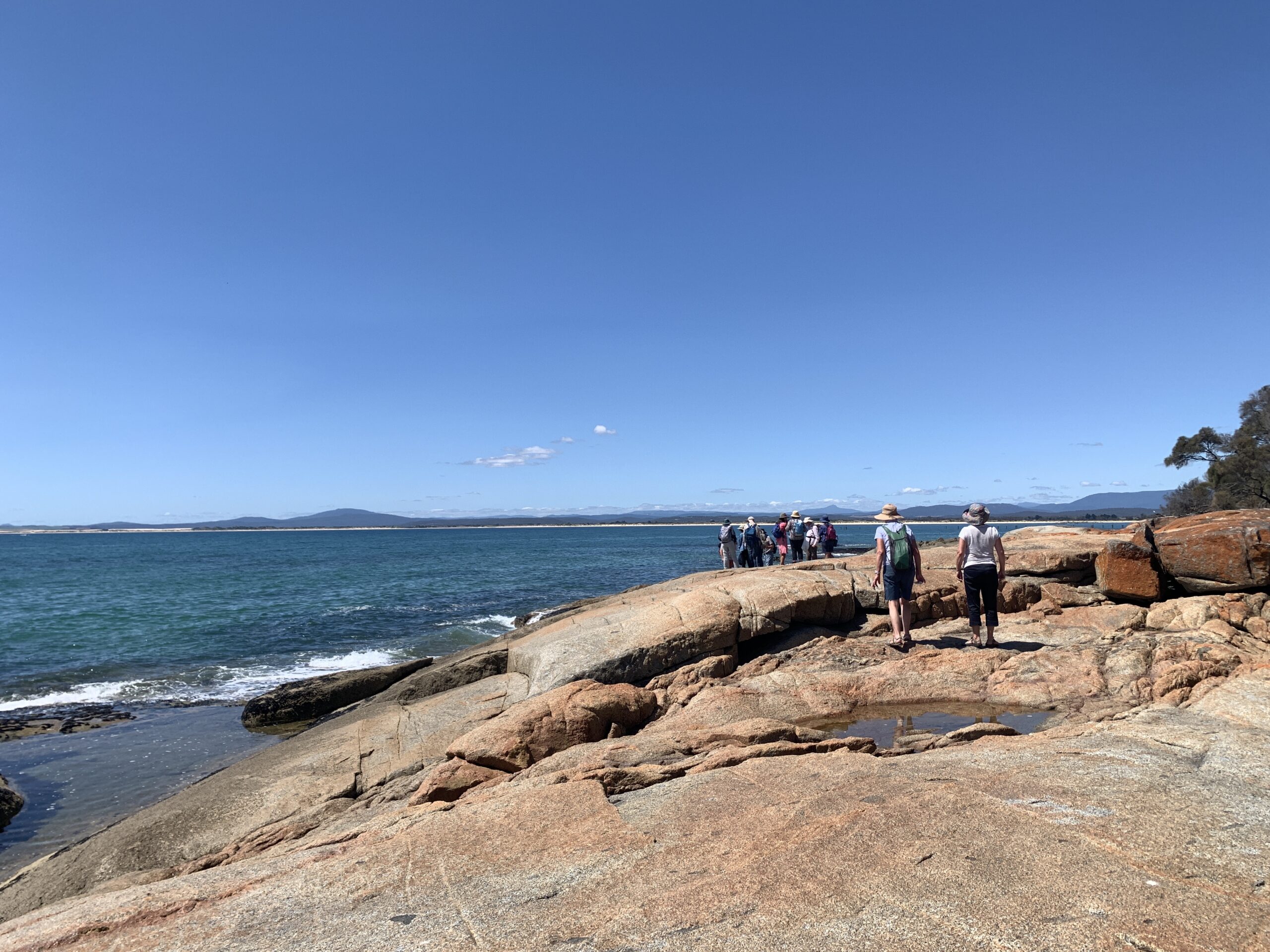
A ramble along the foreshore at Bridport with Mike Douglas providing lots of interesting information about coastal plantings, the altered shoreline, cobble beaches, meteotsunamis and a rock called granidorite.
We had a walk through 4 varied environments: a salt marsh; the modified landscape along part of the foreshore; the granite Point Conservation Area; and The Bridport Wildflower Reserve
Granite Point, Bridport (PR)
March 11th
Low Head with Marita Bodman
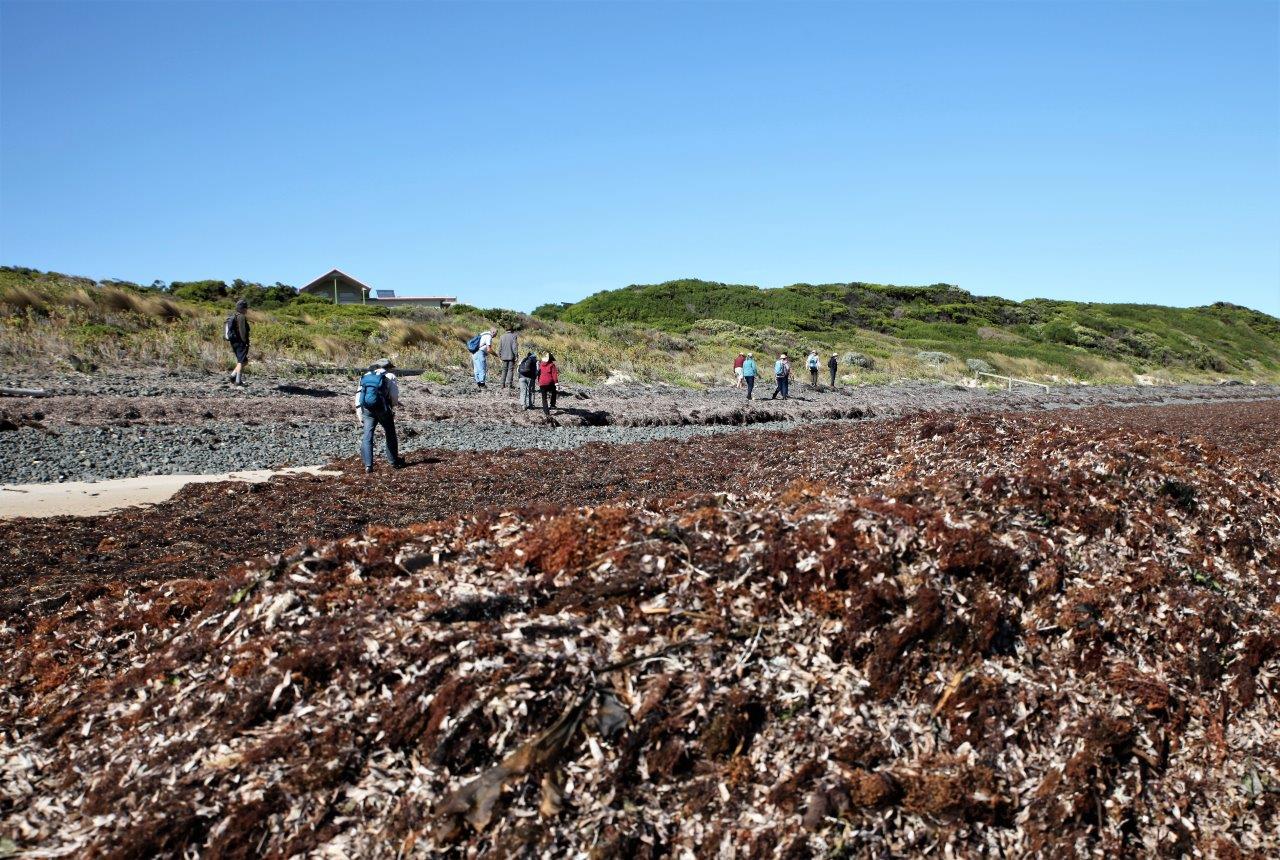
A walk from Bellbuoy Beach to Low Head, along a basalt cobbled shore, then a sandy beach collecting seaweed. A visit to the Low Head Community Garden, and a talk by Marita about a woman ahead of her time – Florence Perrin. Here is a link to Marita’s talk And a link to the seaweed we collected.
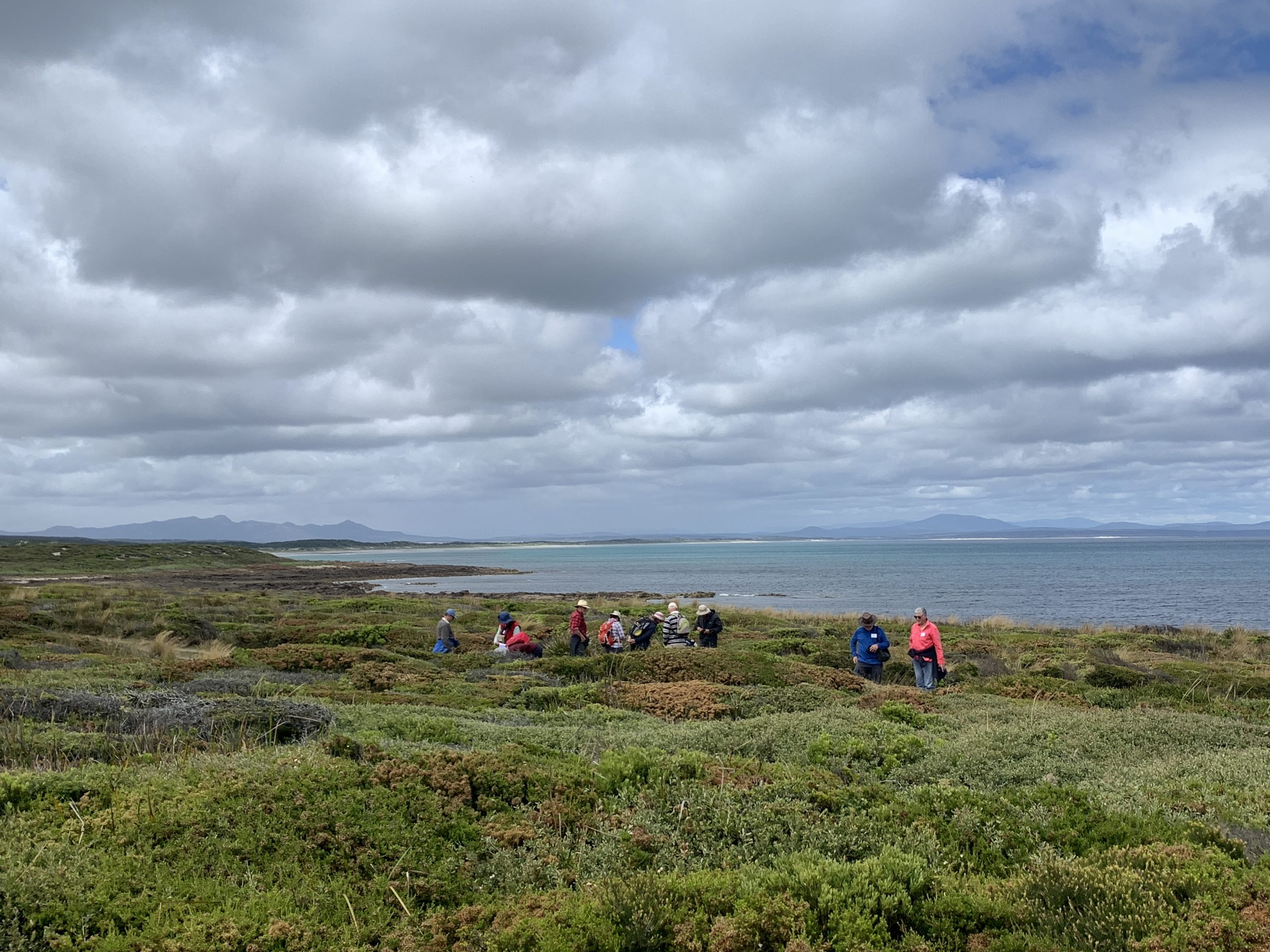
From the Little Musselroe River, across paddocks to the coast, a day with a wide variety of flora, some pelicans, and a clear view of Cape Barren and Flinders islands.
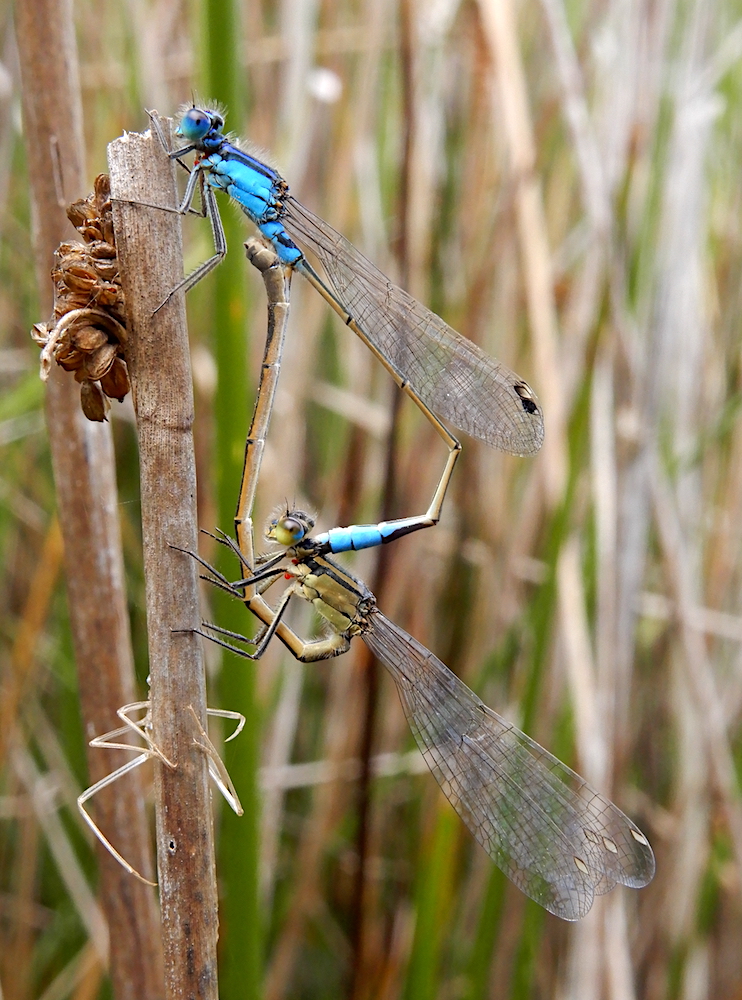
Dragonflies and Damselflies with Nigel Forteath, Professor of Aquaculture UTAS.
Four Springs Lake was established in the 1990s for recreational fishing, and 16 species of dragonflies and damselflies have been seen here. Nigel and the Nats caught dragonflies, then chilled them for a few minutes so they could be identified and photographed.
Common Bluetail Damselflies in second stage of the mating process - Ischnura heterosticta (RC)
12th February
Ben Lomond alpine circuit
The Field Nats traversed the Little Hell pole line circuit, reaching a height of 1546 metres. Flowering snow gentians were abundant, and the most striking wildflowers were the beautiful silver snow daisies (Celmisia). The views were magnificent, with evidence of previous glaciations and later intensive shattering of the heavily jointed dolerite rock by frost action. The great block fields and screes of Ben Lomond are said to be the most extensive in the world.
Field Nats at Little Hell, Ben Lomond (LR)
March 12th
Birds at Native Point
Seen and/or heard: Brown falcon, Brown thornbill, Brush bronzewing, Corella, Crescent honeyeater, Crested tern, Dusky raven, Flame robin, Forest raven, Golden whistler, Green rosella, Grey butcher bird, Grey fantail, Kookaburra, Little pied cormorant, Little wattlebird, Magpie, Olive whistler, Pacific gull, Silvereye, Spotted pardalote, Striated pardalote, Sulphur-crested cockatoo, Tasmanian native hen, Wattlebird, Welcome swallow, White-bellied sea eagle, White-faced heron, Yellow-throated honeyeater.
Paparazzi at Native Point (PR)
April 9th
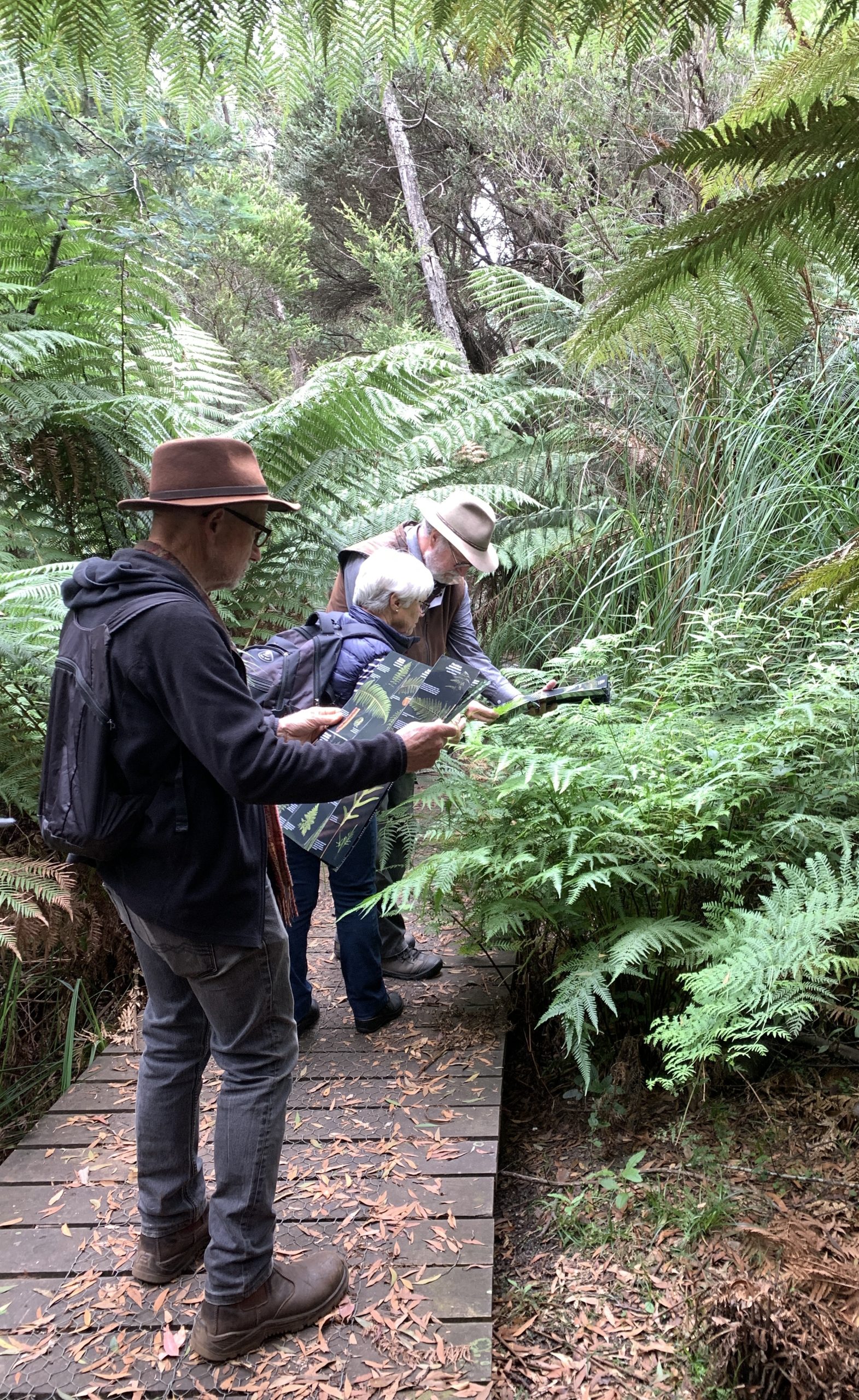
Ferns at Northeast Park, Scottsdale
Lead by Deb Searle, and armed with fern flips, the Nats discovered an amazing variety of species for such a small area.
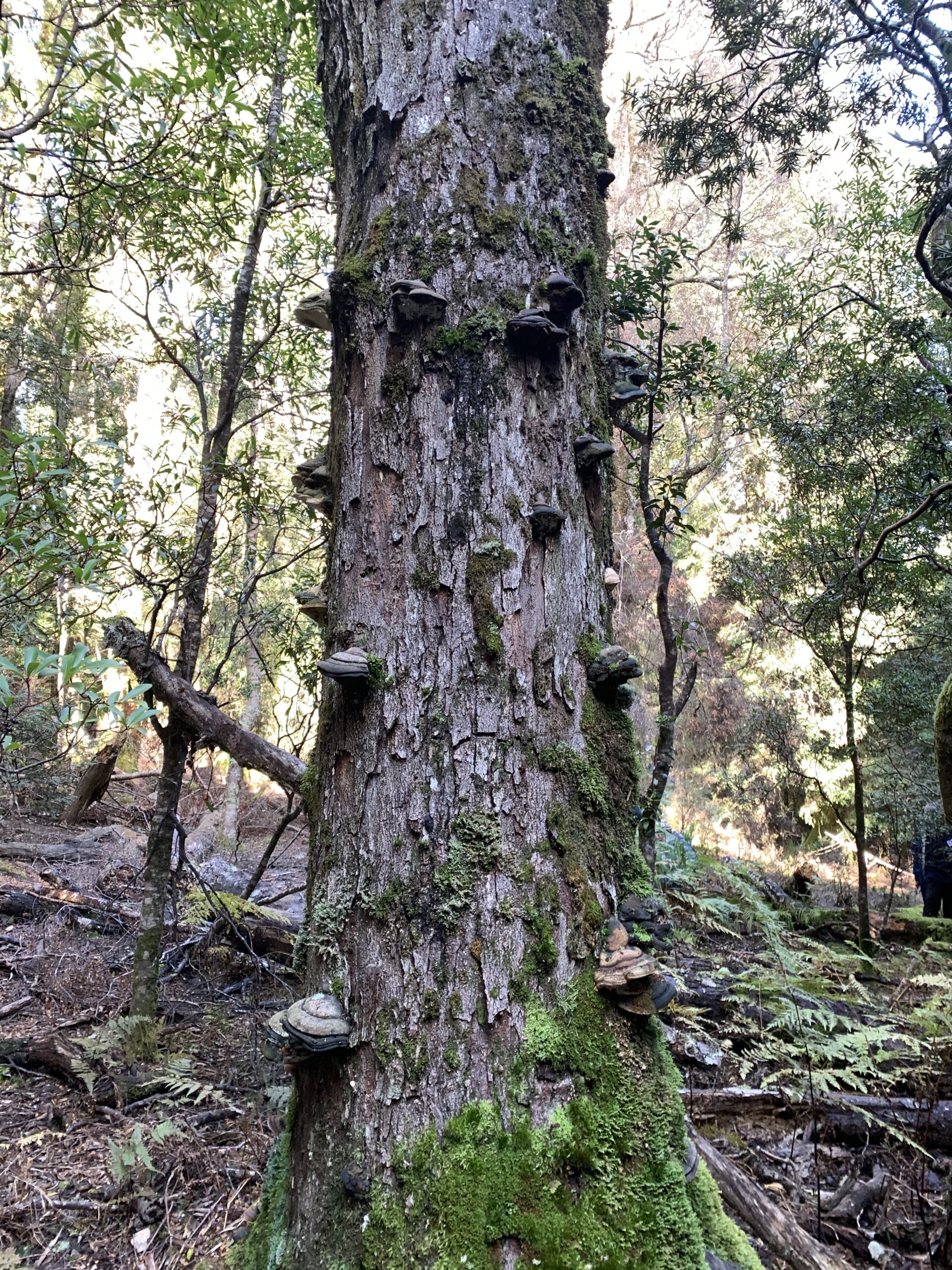
In the rainforest we saw lots of entoloma species, and Clavulinopsis amoebeae and Ascocoryne sarcoides amongst others.
Polypores at Diddleum (PR)
September 10th
A walk along the Supply River to the Flour Mill ruins
The banks of the Supply River were lined at times with tussock grass – Poa labillardierei. Also noted were the native cranberry – Astroloma humifusum; storksbill – Pelargonium australe; the fungus Anthracophyllum archeri, and beyond the ruins: Pinkwood – Beyeria viscosa. This is in the Euphorbiaceae genus, the defining feature being a white milky sap in the stems.
Pinkwood - Beyeria viscosa (LB)
October 8th
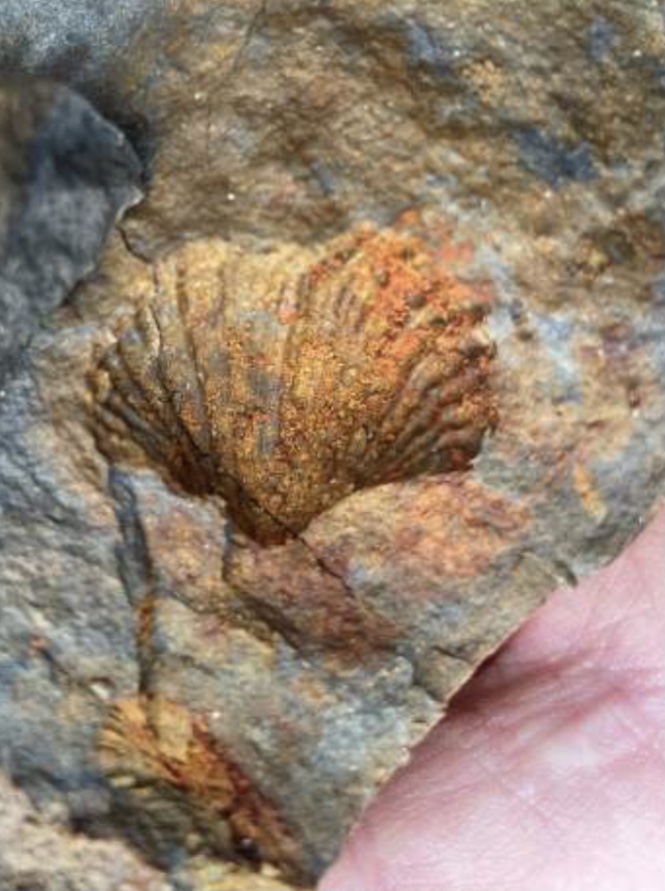
Palaeontology at Liffey and Poatina. Leader Phil Tattersall
Marine shellfish fossil from the Permian period (CF)
November 12th
Cape Portland
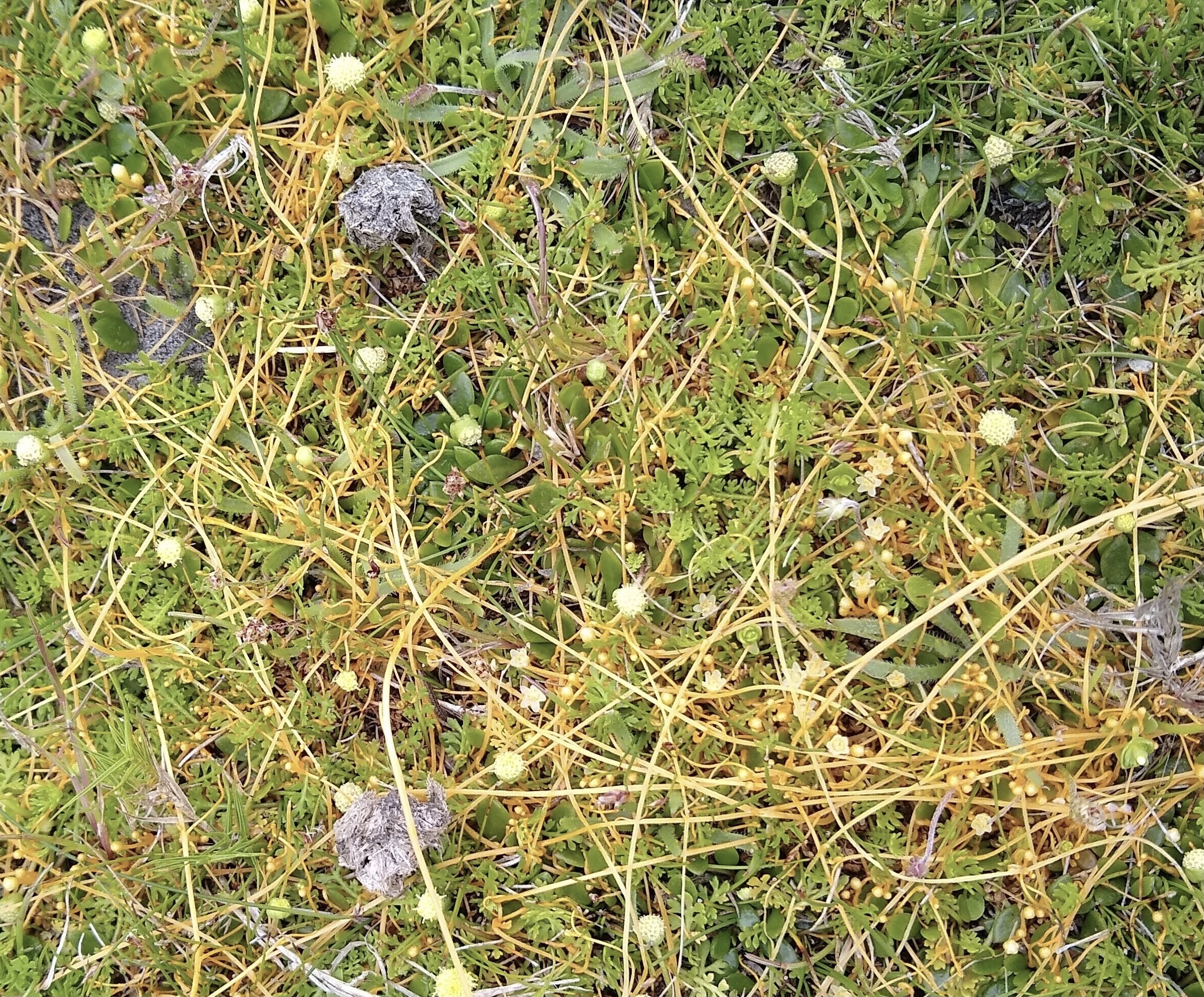
A visit to the Musselroe wind farm, notably to observe the flora and fauna at the Tregaron Lagoon : a mob of Forester kangaroos, and extensive areas of samphire, dodder laurel, and bower spinach
Dodder, prostrately creeping (LR)
December 10th
Bare Rock, Fingal
A rocky climb in vehicles to a plateau above Bare Rock, studded with an amazing variety of flora. The native clematis and blue love creeper were still in flower, and we saw about a dozen members of the daisy family, and several species from the family Ericaceae.
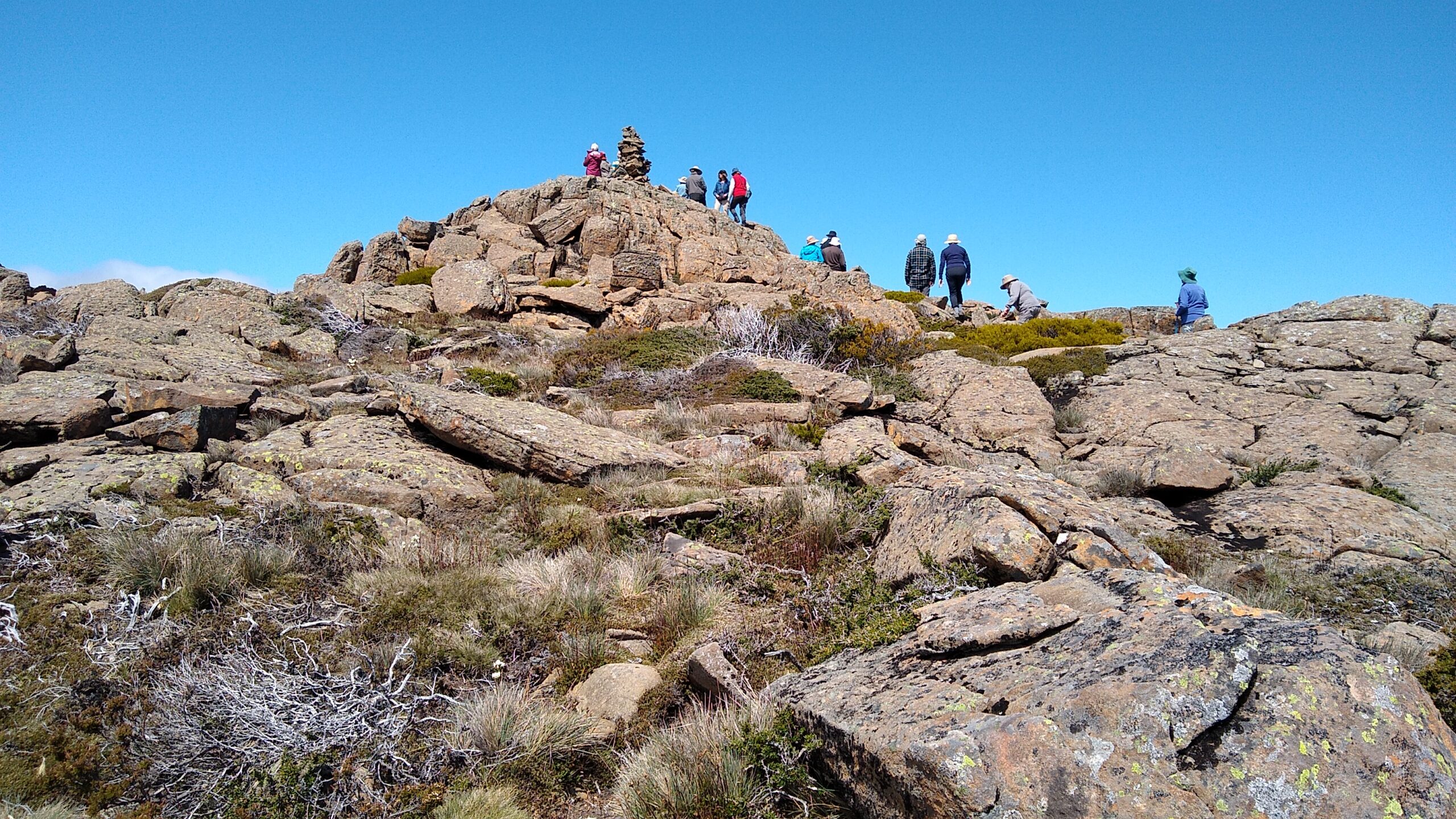
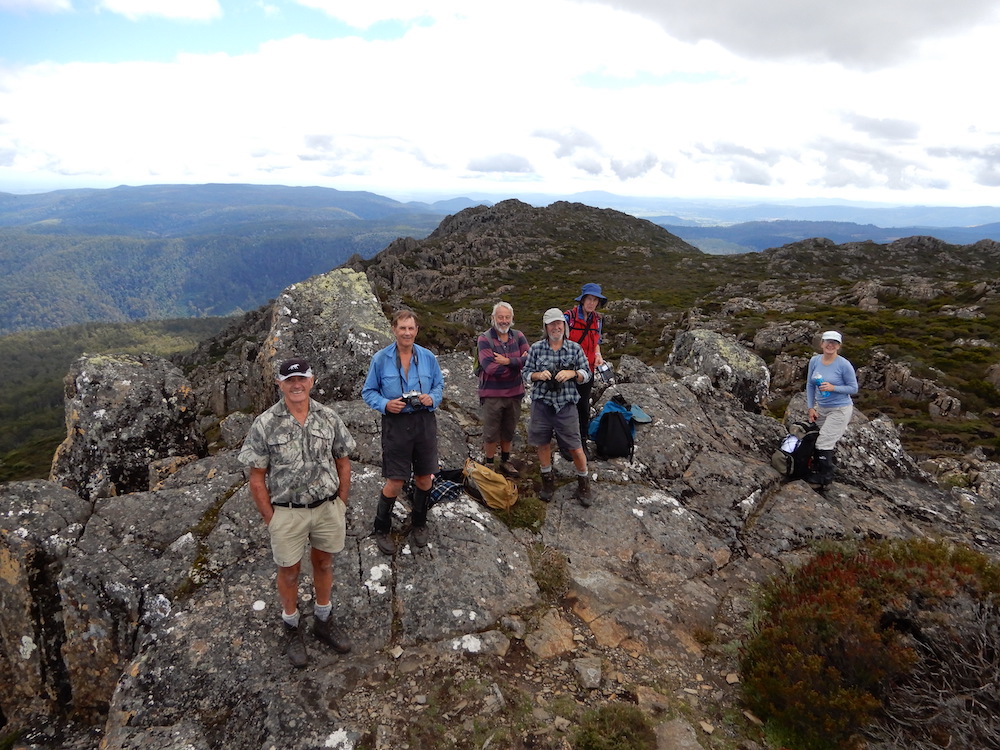
Mike Douglas led us up the steep track to the summit at 1368 metres. From dense regrowth forest of Eucalyptus delegatensis, through a belt of Eucalyptus archeri, then above 1200 metres alpine vegetation, including the beautiful Tasmanian snow gentian. The grand vista from the summit took in Mt Maurice, Mt Albert, Mt Victoria and Mt Saddleback.
Field Nats at the summit of Ben Nevis (RC)
March 13th
Whale Rock, Mt Cameron
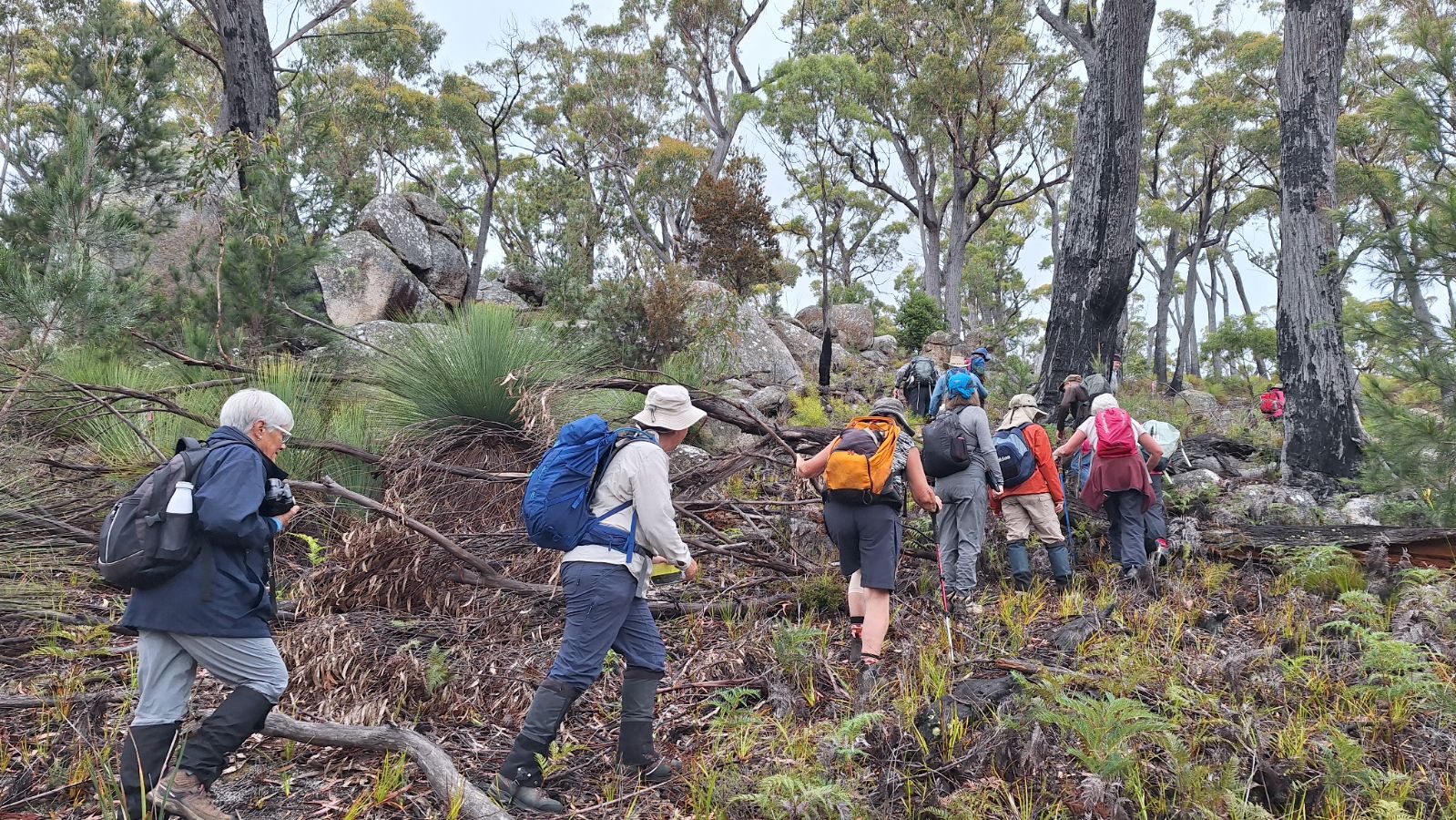
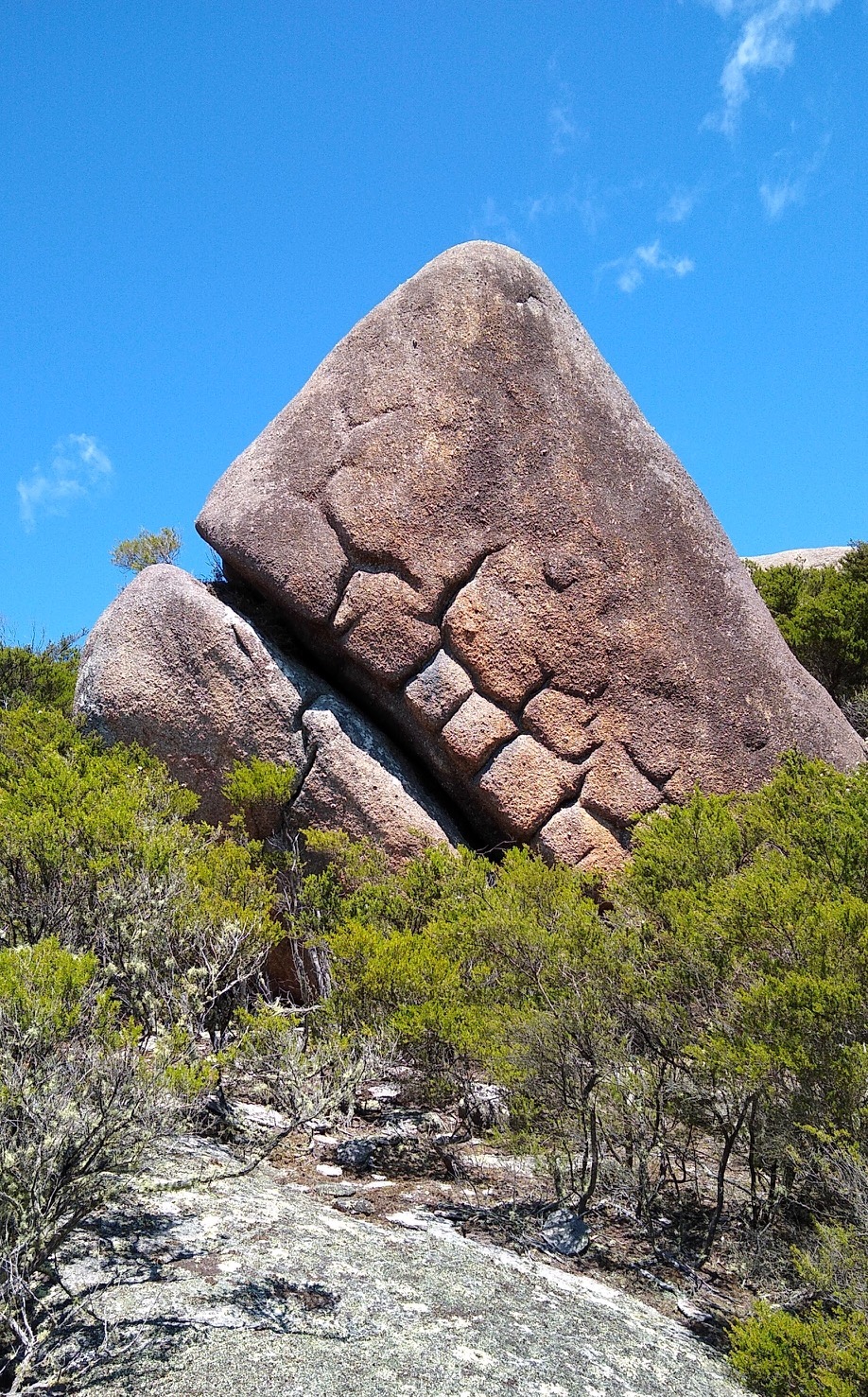
Whale rock, on Mount Cameron’s south West peak, is a spectacular boulder resembling a breaching whale emerging from the granite slab. We walked through open woodland of bracken, dotted with large stringybark and black peppermints, their trunks blackened by bush fires. Also common were caterpillar acacia, bulloak, banksia, kunzea and tea tree. Then we passed between massive sculptural boulders with drifts of the rock orchid Dockrillia clinging to them. From the huge steep granite slab beside Whale Rock, where we stopped for lunch, there are breathtaking views to the west across the Mt Cameron Regional Reserve, and north to the coast and the mouth of the Ringarooma river at Boobyalla.
Whale Rock, Mt Cameron (LR)
April 10th
Paradise High Plain
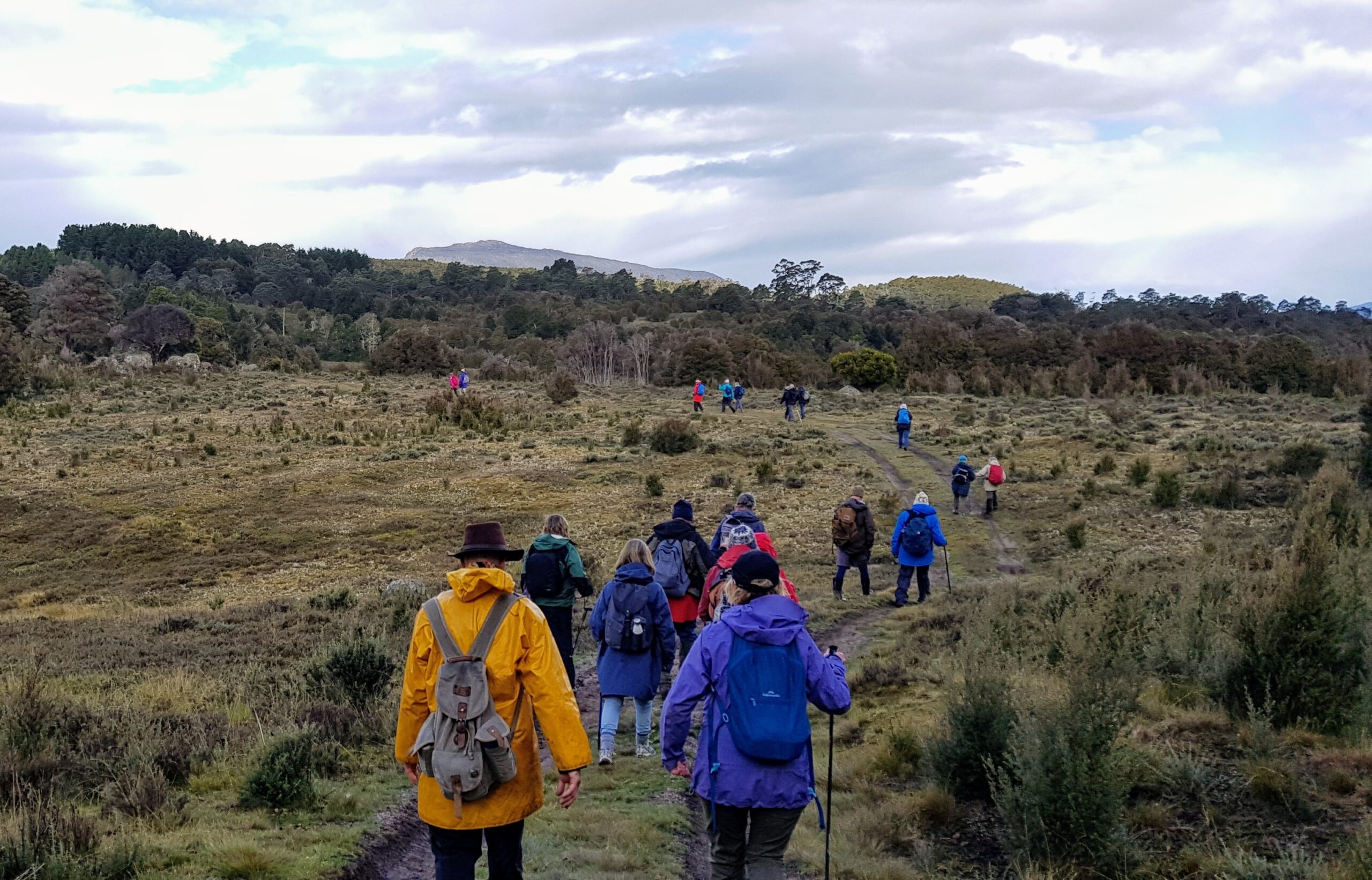
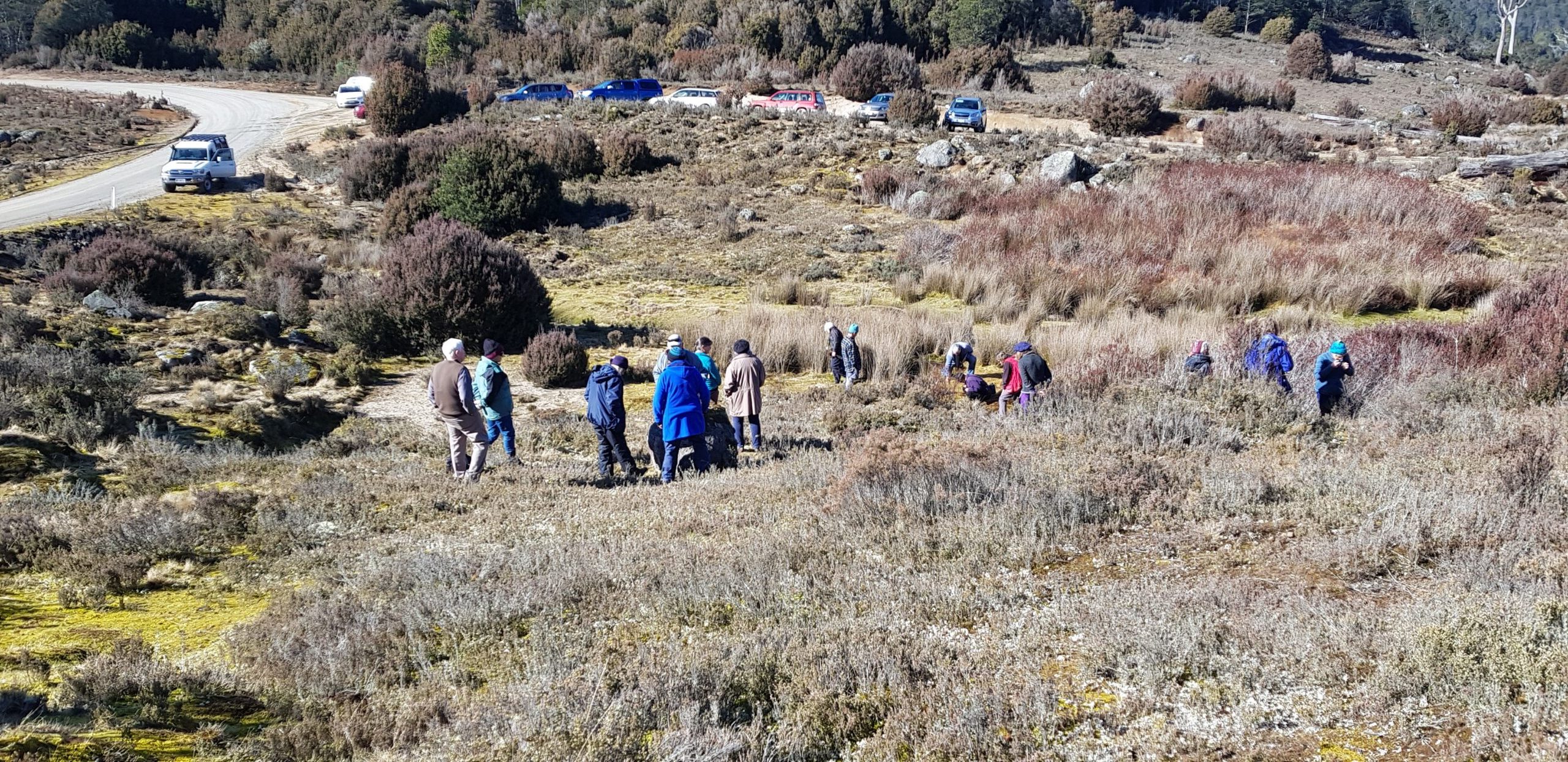
Views of Ben Nevis, and Mts Victoria and Albert; an old pine arboretum, vestigial rain forest, 2 huge 200 (at least) year old myrtles, sub-alpine vegetation, and even a bit of wind-driven snow.
Field Nats at Paradise Plains (PR)
May 8th
Two properties at East Diddleum
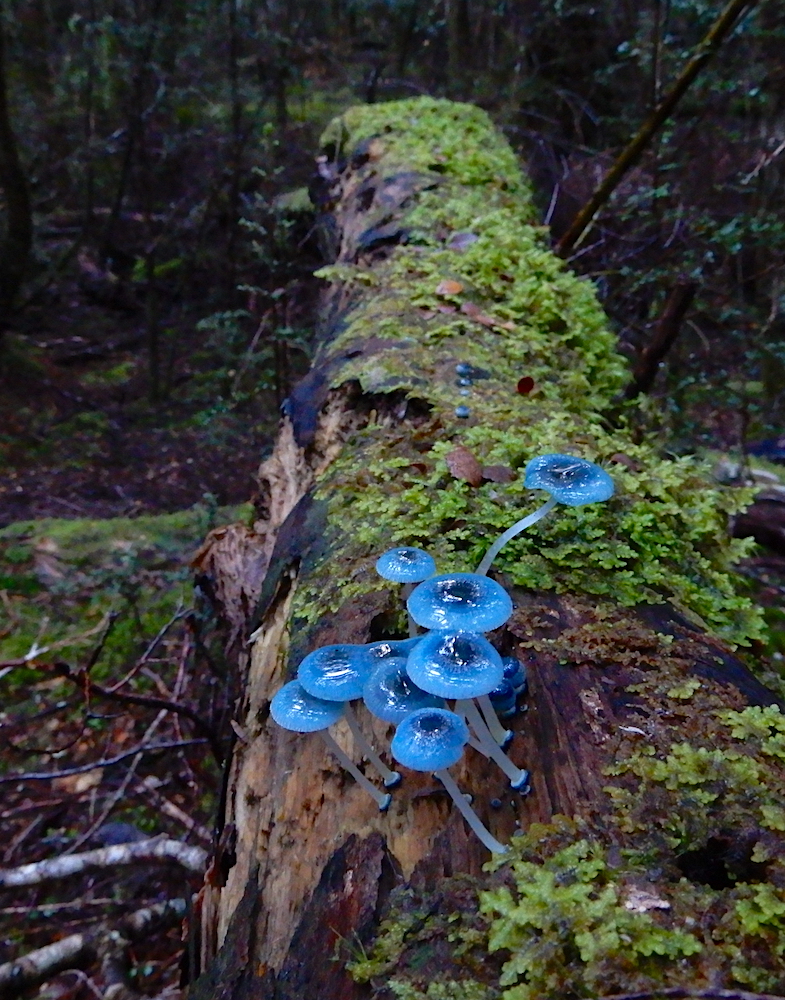
We visited two properties, the first with sub-alpine grassland, and both with native rainforest. The highlight of the day was the wide range of fungi to be seen and photographed.
Mycena interrupta, seen at East Diddleum. (RC)
June 12th
Notley Fern Gorge
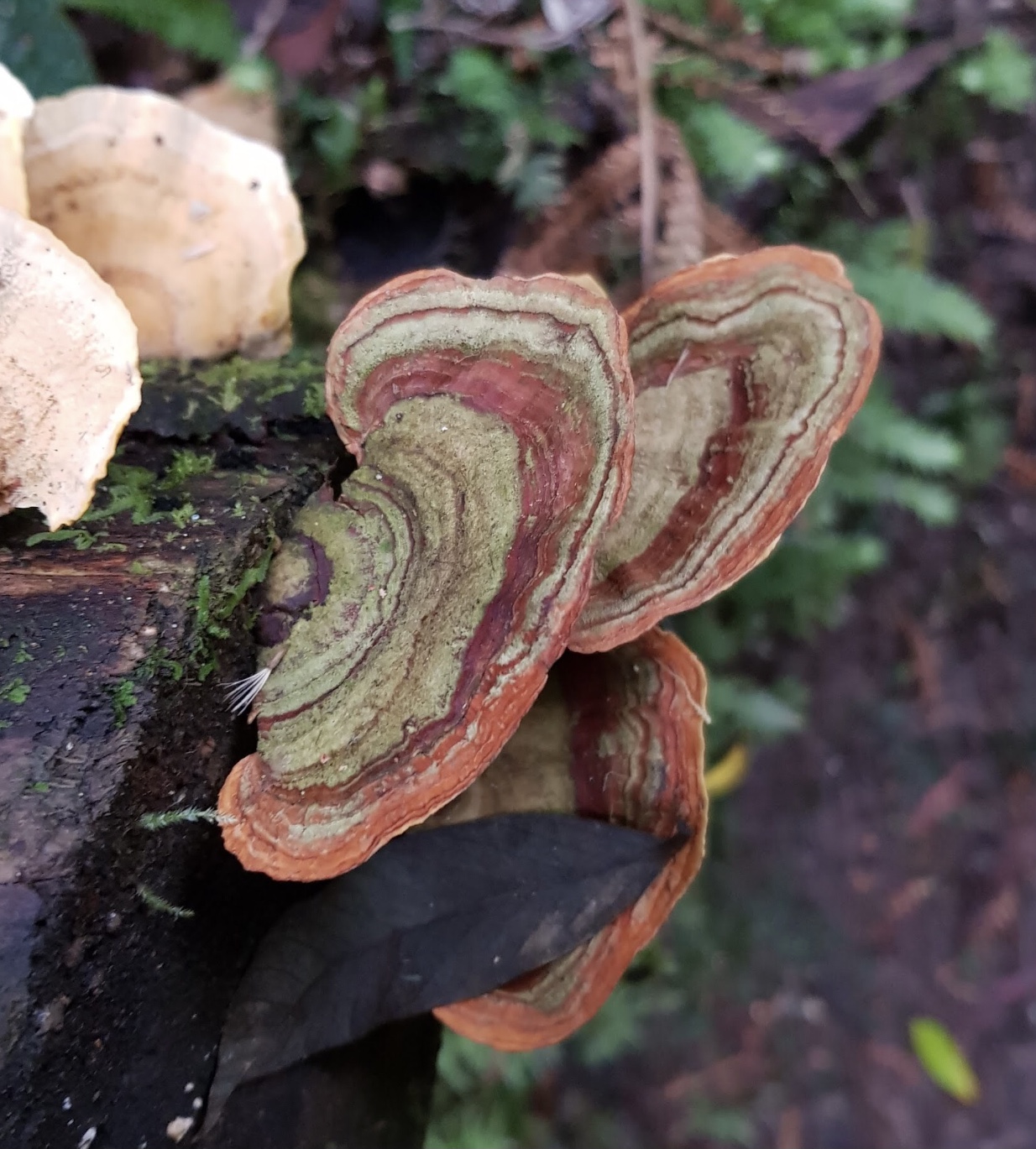
A richly satisfying fungi foray in the remnant rain forest.
Trametes sp. (PR)
September 11th
Mount Cameron with Mike Douglas
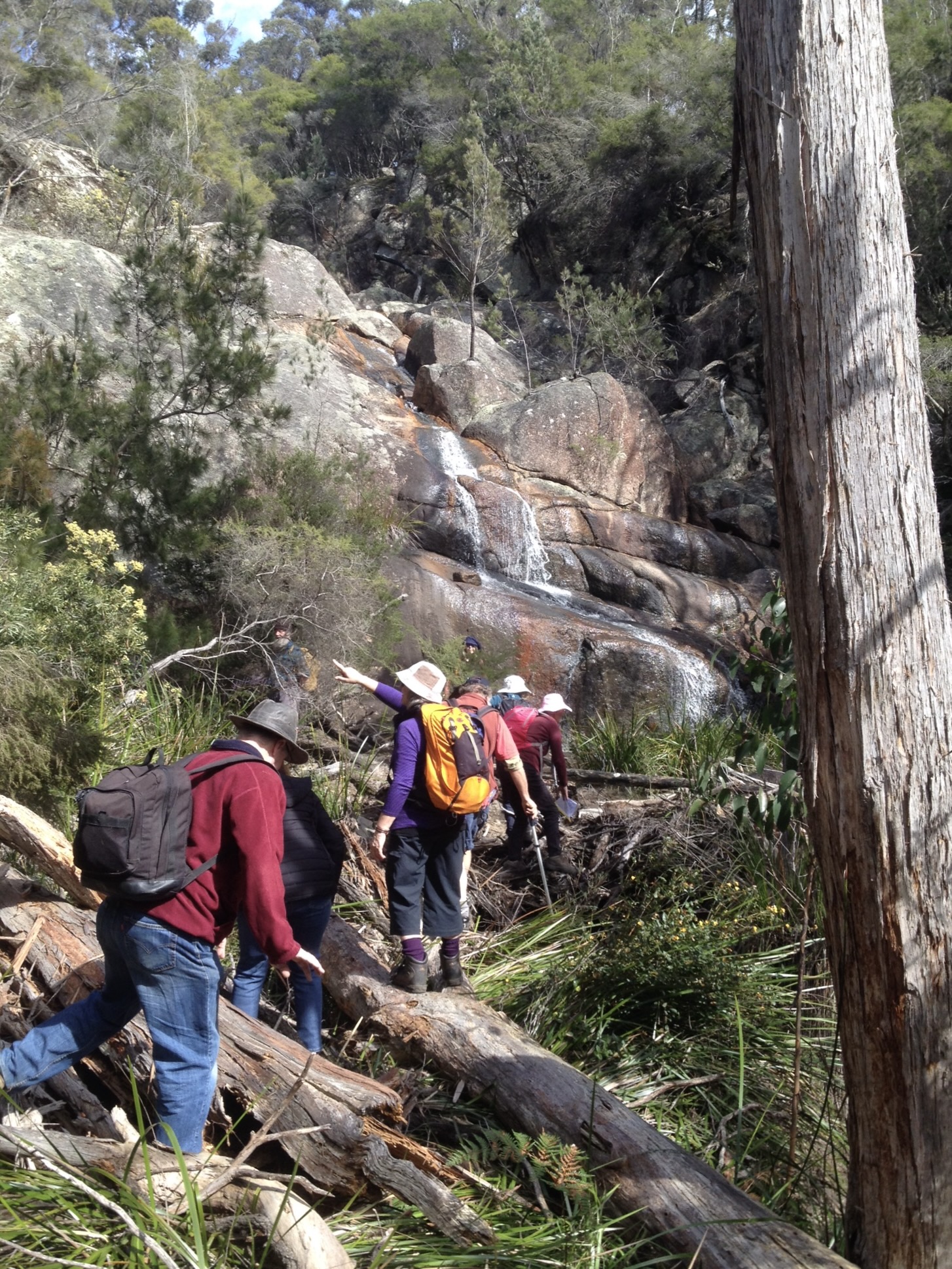
We walked a network of 19th century water races from tin mining days, some dug by hand by both Chinese and European miners. We took a scrambled diversion across Deep Creek (aka Galloway Creek)
Approaching Deep Creek falls Mount Cameron (CB)
October 9th
Upper Scamander and Granite Knob
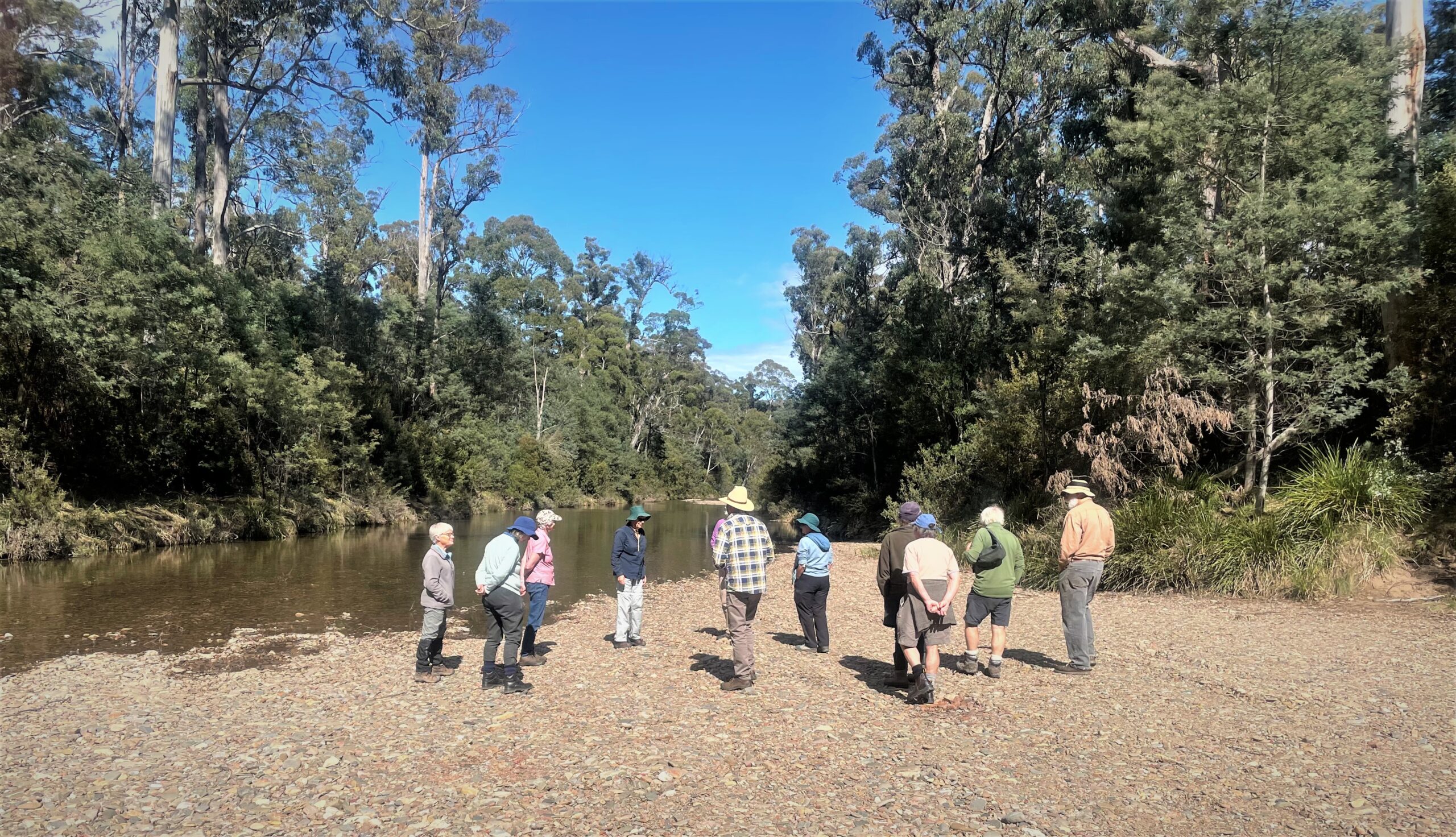
Field Nats at the Avenue River (CF)
November 13th
Mt. Barrow Discovery Trail with Len Gillett
We explored the Trail in vehicles, interspersed with short and interesting walks. Remains of the timber industry going back to the mid 1800s were seen, as well as the mightier destruction caused by forestry happening right now. We picnicked at the rather neglected discovery centre, and found many orchids in bloom. Our last stop was at the Weaver’s Creek Waterfall.
Field Nats on Mt Barrow
December 11th
Cape Portland – Petal Point and Wind farm
Looking for threatened species.
Field Nats at Petal Point (PR)
Lorem ipsum dolor sit amet, consectetur adipiscing elit. Ut elit tellus, luctus nec ullamcorper mattis, pulvinar dapibus leo.
Lunch and a ramble at the pools. Then to the 3.7 metre-long tunnel cut through solid granite in the early 1880s by the Briseis Tin Mining company. We saw glow-worms, Arachnocampa tasmaniensis, and the cave spider, widely distributed in Tasmania – a top-level predator maintaining a stronghold around the entrance zones to caves and tunnels.
March
Bush-food day at Little Musselroe
April
Mt Cameron Range – the Skywalk
May
Tomahawk walk and talk with Aboriginal elder Patsy Cameron
Patsy shared her extensive knowledge of Aboriginal culture, local plants and animals, and bush tucker.We were introduced to “cunnygong” (pigface), the natural aloe vera for burns and ant bites. Also of note was the native cranberry, Astroloma humifusum,Diplarrena moraea, the white flag iris, a favourite plant for basket weaving. And an unusual species of native cherry, Coastal Ballart, Exocarpus syrticola,
Field nats at Tomahawk(PR)
June
Blackman’s Lagoon
Blackman’s Lagoon covers 28 ha. And is an important site for the rare State and Commonwealth protect-ed dwarf galaxias Galaxiella pusilla. This is a small scaleless species which grows to a maximum of 40mm and can survive in the substrate even when the water dries up. A list of native species and bird-life is here
Blackmans Lagoon (PR)
July
Rocky ramble Mount Cameron
A small band of nine members enjoyed this walk partway up the Wedgetail Peak Track, starting from the Field Study Centre. The track wandered through a woodland of gnarled black peppermints, stringy barks and white gums and then climbed up rocky slopes dotted with granitoid monoliths resembling abstract sculpure
September
Harridge Falls
After a scramble down the steep, humus-rich and damp hillside we slid and wended our way over fallen logs covered in beautiful fungi such as the “curtain crisp” until we reached the Weld River and the falls. We disturbed an echidna at his ant lunch and caught a glimpse of the prized pink robin. We also spotted some maroon hoods, Pterostylis pedunculata, thriving in the sandy damp conditions.
October
Federation of Field Nats get-together Port Sorell
November
W.A.G. Walker Rhododendron Gardens, Lalla
In the gullies Tree ferns, dogwoods, Bursaria, white gums and various species of rhododendrons. Higher up, Eucalyptus obliqua and a stand of Eucalyptus viminalis, On the ground, maroonhoods, the curtain crisp fungus, and the dogs vomit slime mould. Above, the crescent honeyeater, the golden whistler, pardalotes, thornbills, cuckoos, the shrike thrush, and everywhere wrens and robins.
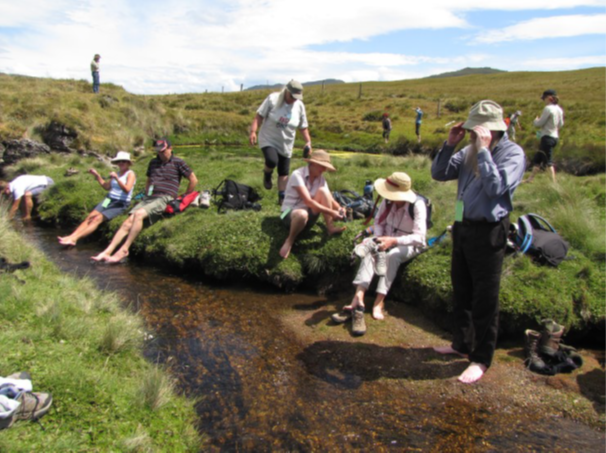
The Tas. Land Conserv-ancy held an open day for exploring the Vale of Belvoir with TLC staff and expert supporters as guides. The Vale of Belvoir is a large open limestone valley located about 15 km NNW of Cradle Mountain, in the lee of the Black Bluff Range. It is about 10 km long by 2 km wide, trends NE-SW, and has an open grassy floor flanked by strips of ancient rainforest and eucalypt forest.
Cooling off in the Vale River (LB)
March
Shoreline monitoring, Weymouth
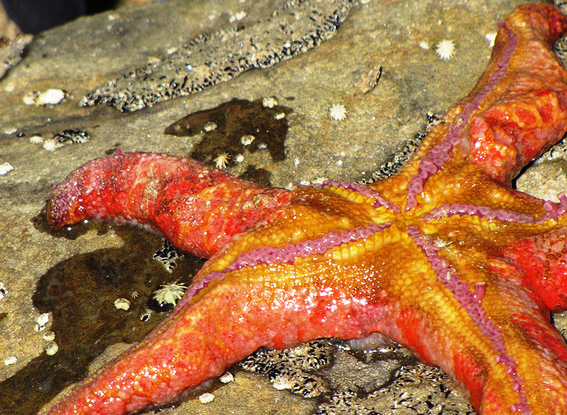
We chose a site for counting and measuring near a launching ramp at Weymouth. It consisted of rocks. It looked unlikely. But it was actually an extremely rich and diverse area: Rosette barnacles, common sea urchins, eleven-armed seastar, sea apple, decorator crab, hairy-stone crab, even a blue-ringed octopus.
Mosaic seastar, Weymouth (PR)
September
Scottsdale – Burrowing crayfish
We celebrated National Threatened Species Day with a visit to the habitat of the Scottsdale Burrowing Crayfish, at Northeast Park (Scottsdale) then on the Old Waterhouse Road
Looking for crayfish chimneys (LB)
October
Searching for the stag beetle, Goshen
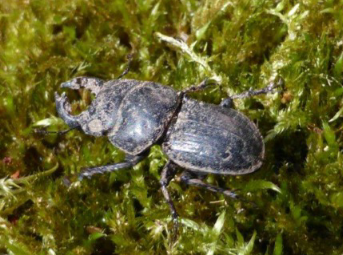
Ian and Kim Matthews have a bushland block at Goshen, north-west of St Helens. In October 2014 they hosted our club for a fascinating day during which we heard the story of the discovery of this rare stag beetle, met the widow of George Bornemissza, after whom the beetle is named, and were guided by Mike Bouffard on our search to find a live specimen
Adult Hoplogonus bornemissza
November
Exploring Anson’s Bay
We ambled along Jenny Bicanic’s favourite paths looking for orchids, listening for birds.
Examining orchids, Ansons Bay (PR)
December
Bird watching, Greens Beach
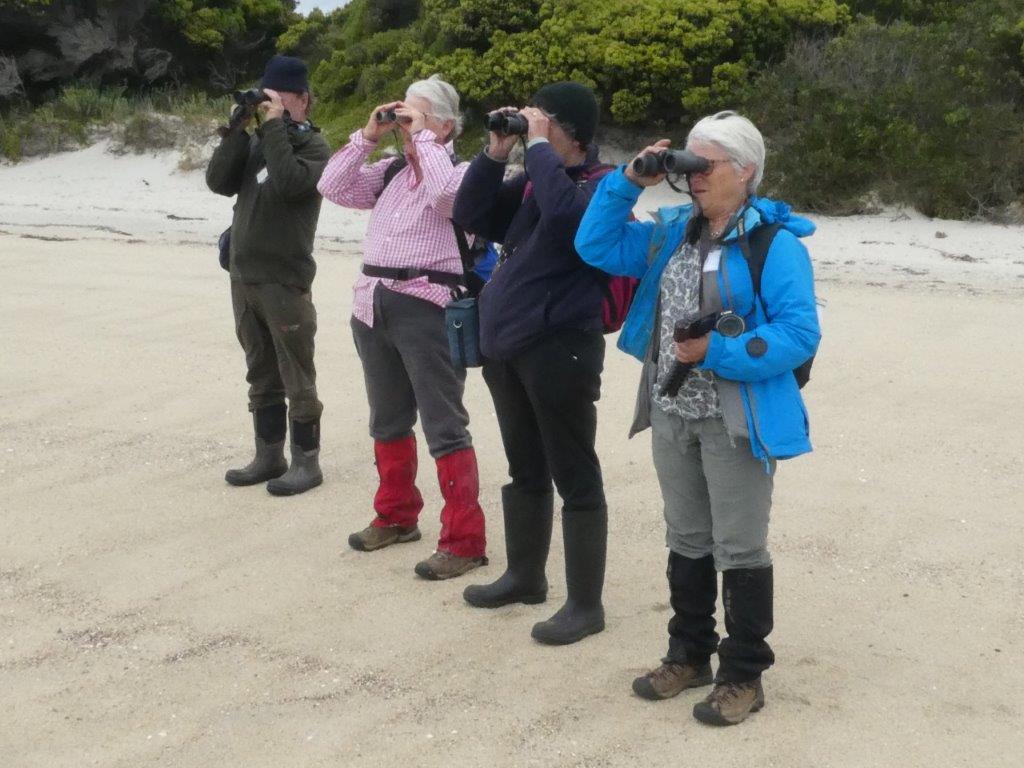
The December activity involved bird-watching on the property of Don and Barbara Pitt, 340 hectares at Friend Point, near Green’s Beach, where the Tamar River meets Bass Strait.
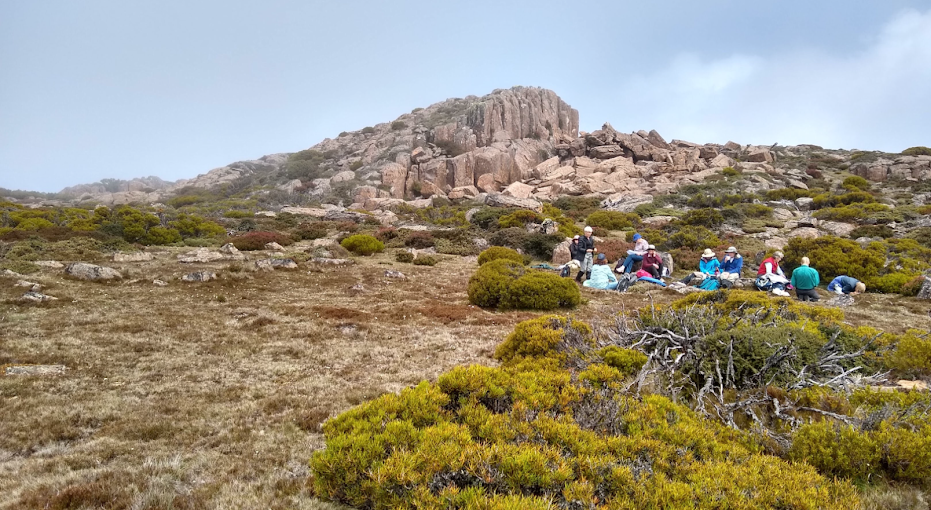
Mike Douglas lead us up a rocky path across an extensive dolerite block field, with impressive hexagonal columns vanishing into the mist. Many alpine plants were in flower. We had lunch on the plateau of the Plains of Heaven, where the massive roche moutonnée rose behind us.
Lunch on Ben Lomond
March 14th
Merthyr Park and Mt Direction
Len Gillett lead us on these two walks which are approximately 16 kms apart. The highlight at Merthyr Park was seeing the humungous ghost fungus omphalotus nidiformis, which glows in the dark. At the summit of Mount Direction we saw the interesting remains of a semaphore station from the early 1800s – a signal system which sent information about Tamar River traffic between Low Head and Launceston.
Descending Mount Direction (PR)
July 11th
Myrtle Park Forest Reserve, Springfield
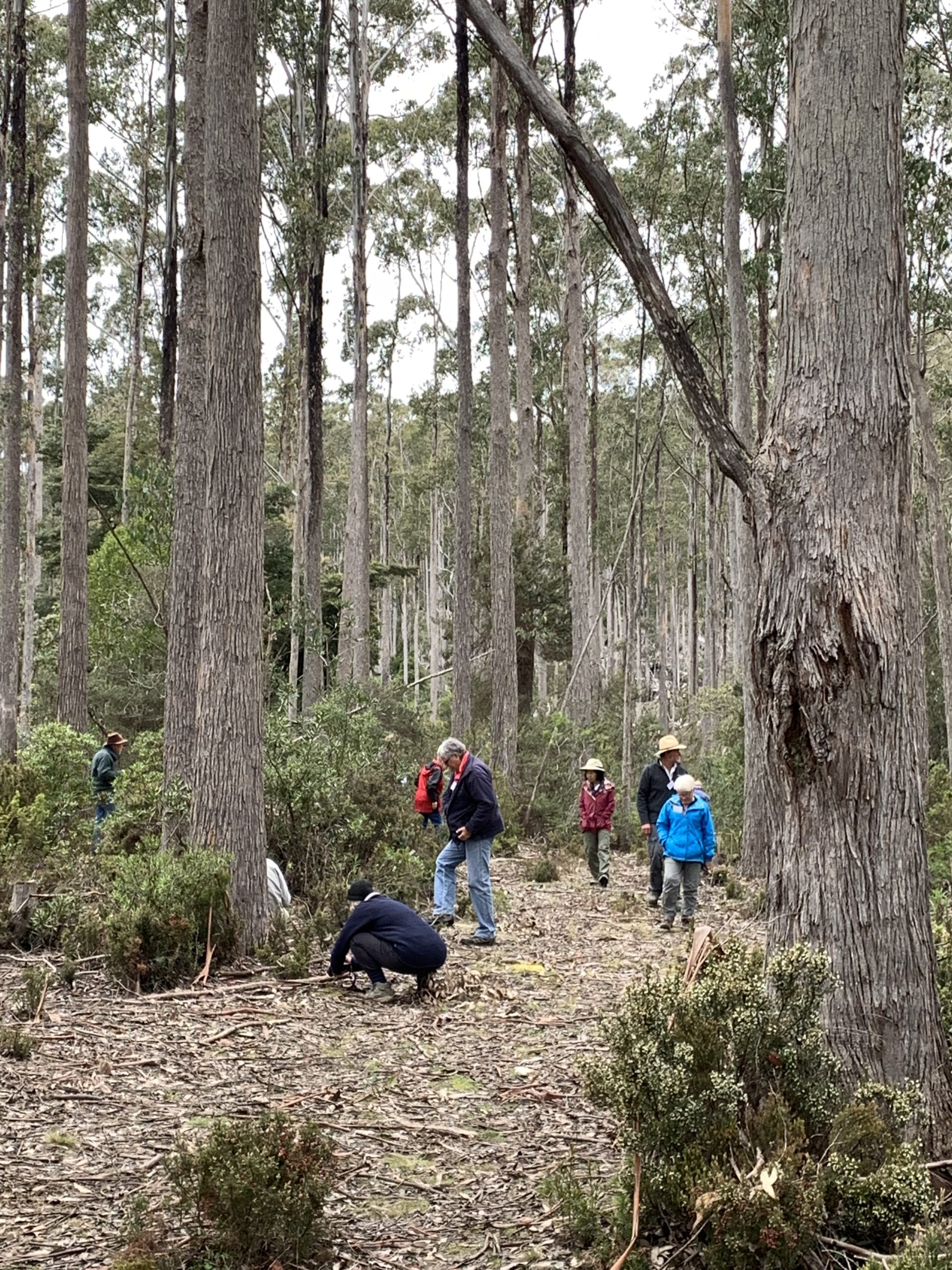
We measured, photographed and counted over 100 living stumps of Douglas firs cut down over 40 years ago
Living stump of Douglas fir
August 9th
Paradise Plains Reserve
Discovering bryophytes with Dr. Perpetua Turner at Paradise Plains
Paradise Plains Reserve
September 10th
A trip to Eddystone Point
Eddystone Point, also known by its Aboriginal name Larapuna, is in the Mount William National Park and marks the northernmost tip of the Bay of Fires region. Larapuna is the homeland of the Palawa (indigenous Tasmanian) people, and features the historic Eddystone Point Lighthouse.
Eddystone Point
October 10th
Winifred Curtis Reserve, Scamander.
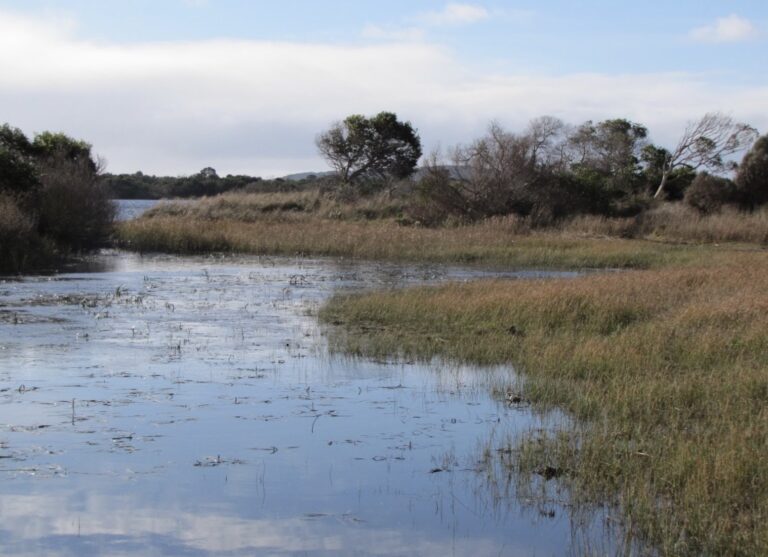
The reserve is an 80 hectare ecosystem adjacent to Henderson Lagoon, with dry sclerophyll bushland, heath, marshland, wetland, dunes, and abundant bird life. Unfortunately It was too wet underfoot for the Field Nats to get to dunes or lagoon.
Winifred Curtis, 1905-2005 was Tasmania’s most distinguished professional botanist.
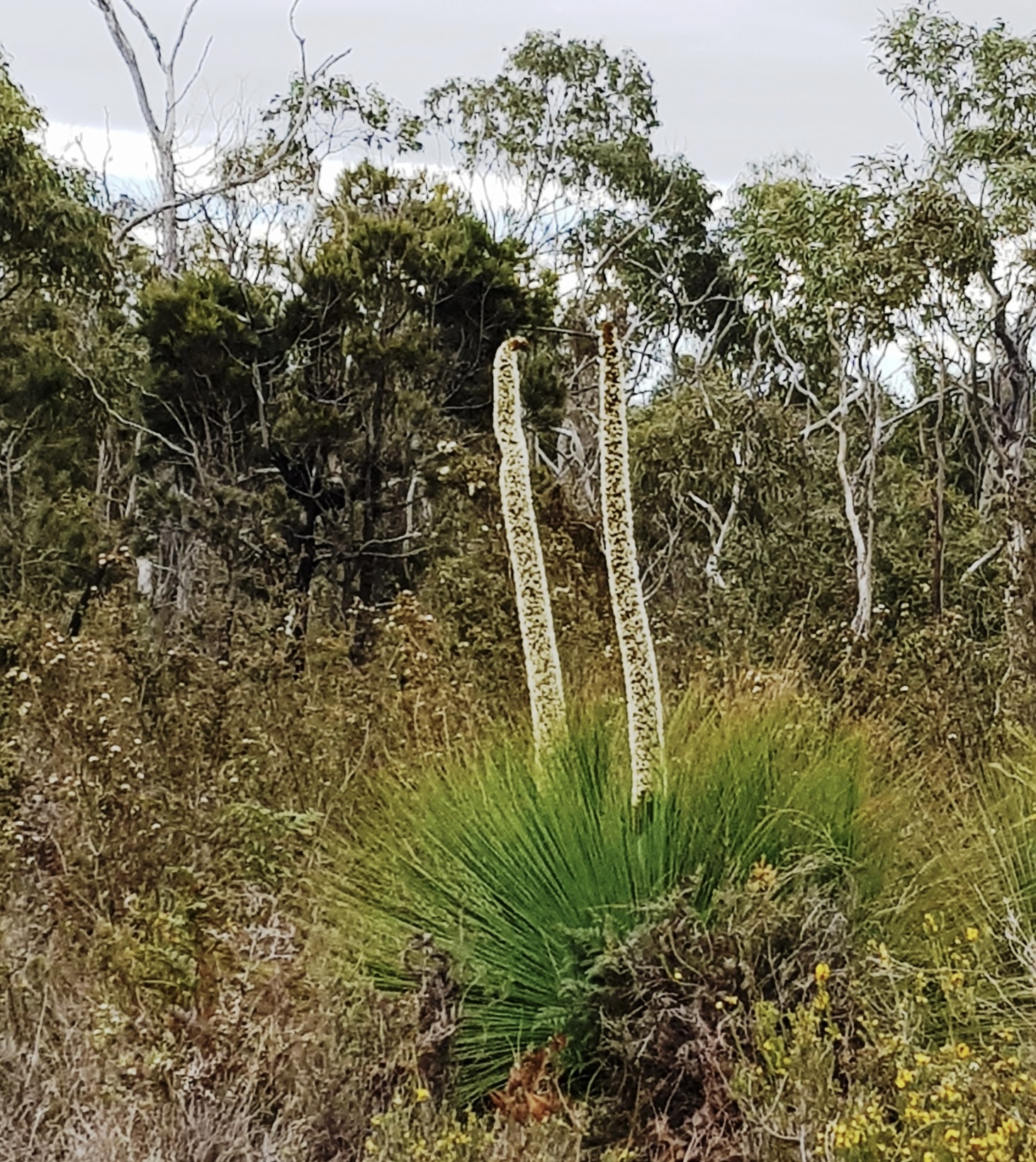
Xanthorrhoea
November 14th
A field trip to Upper Scamander.
After walking from the washed-out bridge at Brilliant Creek, and lingering over a wealth of orchids along the road-side, we crossed the Scamander River, and left the road, walking through dry open sclerophyll forest dominated by Eucalypts (including E. amygdalina – black peppermint, and E sieberi – iron bark).
FIeld trip to Upper Scamander
December 12th
Cape Portland
A trip to the Musselroe wind farm to explore the northern coast of Cape Portland, and watch for migratory sea birds. More about the wind farm here